





What to Look for When Choosing an Indoor Playground Equipment Manufacturer
Discover key factors to consider when selecting an Indoor Playground Equipment Manufacturer with Far Kids Island. Learn how to choose quality, safe, and innovative Indoor Playground Equipment that ensures fun and durability for your play spaces. Trust Far Kids Island for expert solutions.
Social Links
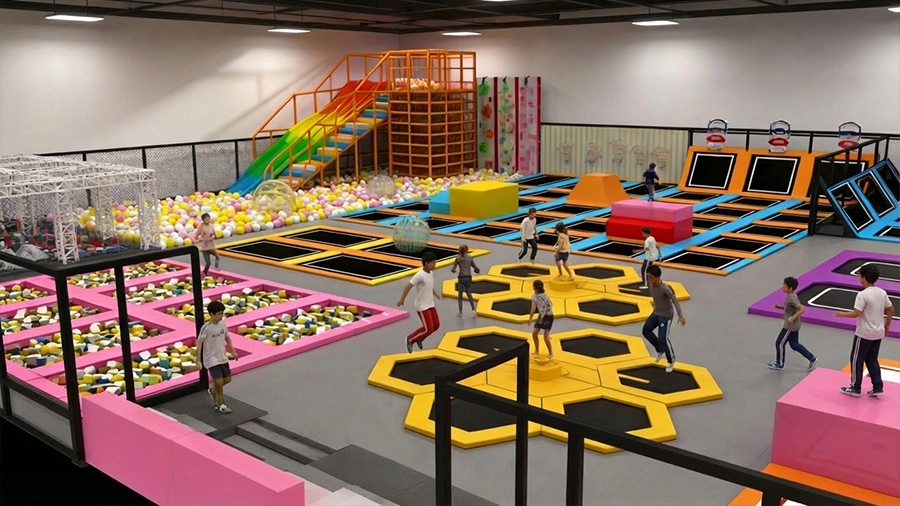
When investing in a family entertainment center, your most critical decision is selecting an indoor playground equipment manufacturer. The physical structures dictate your operational efficiency, maintenance expenses, and liability risks over the next decade. This guide explores the exact engineering and operational details you must evaluate to ensure you are purchasing high-quality commercial indoor playground equipment that is safe, compliant, and profitable.
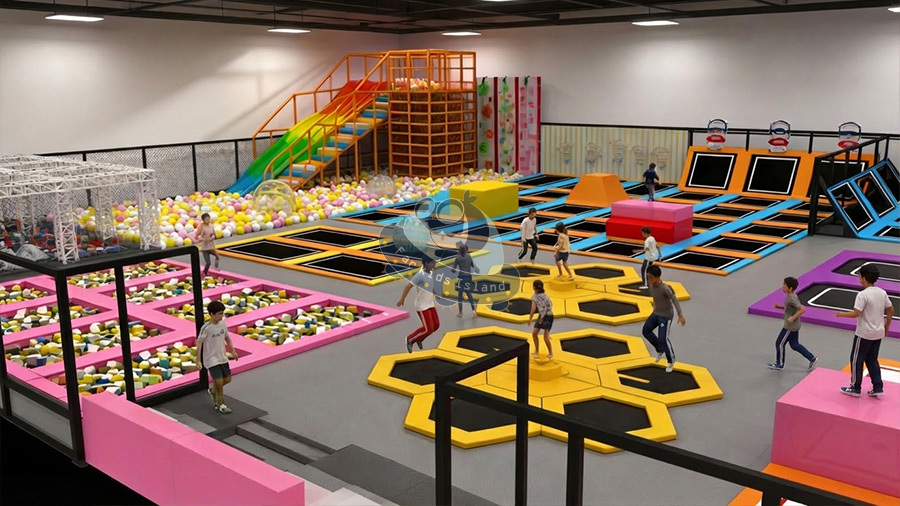
Factory Capabilities: Real Manufacturer vs. Trading Company
The immediate challenge in procurement is separating genuine source factories from middlemen. The entity that physically builds your equipment controls your lead times, material consistency, and structural integrity. A reliable indoor playground equipment manufacturer will always prove their production capabilities upfront, rather than just showing a glossy catalog.
The Importance of In-House Production Facilities
Working with a direct indoor playground factory eliminates the communication delays and hidden markup costs associated with third-party brokers.
- Supply Chain Control: A true manufacturer manages raw material sourcing directly. If there is a sudden shortage of steel or foam, an in-house factory can adapt production schedules to ensure your grand opening is not delayed.
- Customization Flexibility: Source factories can modify metal tooling and dimensions on the fly to fit your specific venue, whereas trading companies are limited to selling pre-packaged, standardized modules.
- Direct Accountability: If a warranty issue arises, the original factory has the engineering blueprints to fabricate and ship an exact replacement part immediately.
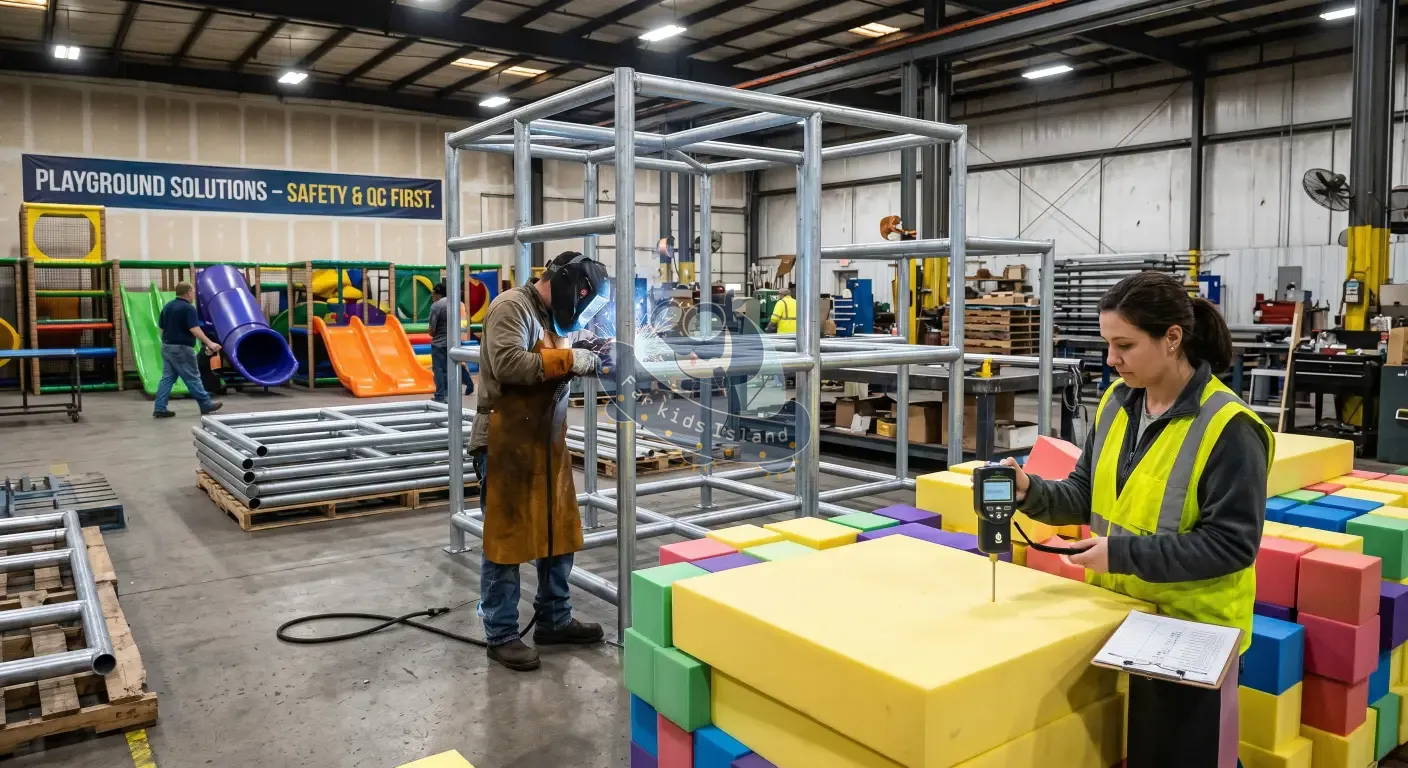
Transparent Quality Control (QC) Processes
Reputable manufacturers do not hide their production methods. When auditing a supplier, demand documentation on their testing phases:
- Weld Inspections: Quality control must include cross-sectional testing of welded steel joints to check for porosity, ensuring the frame won't crack under stress.
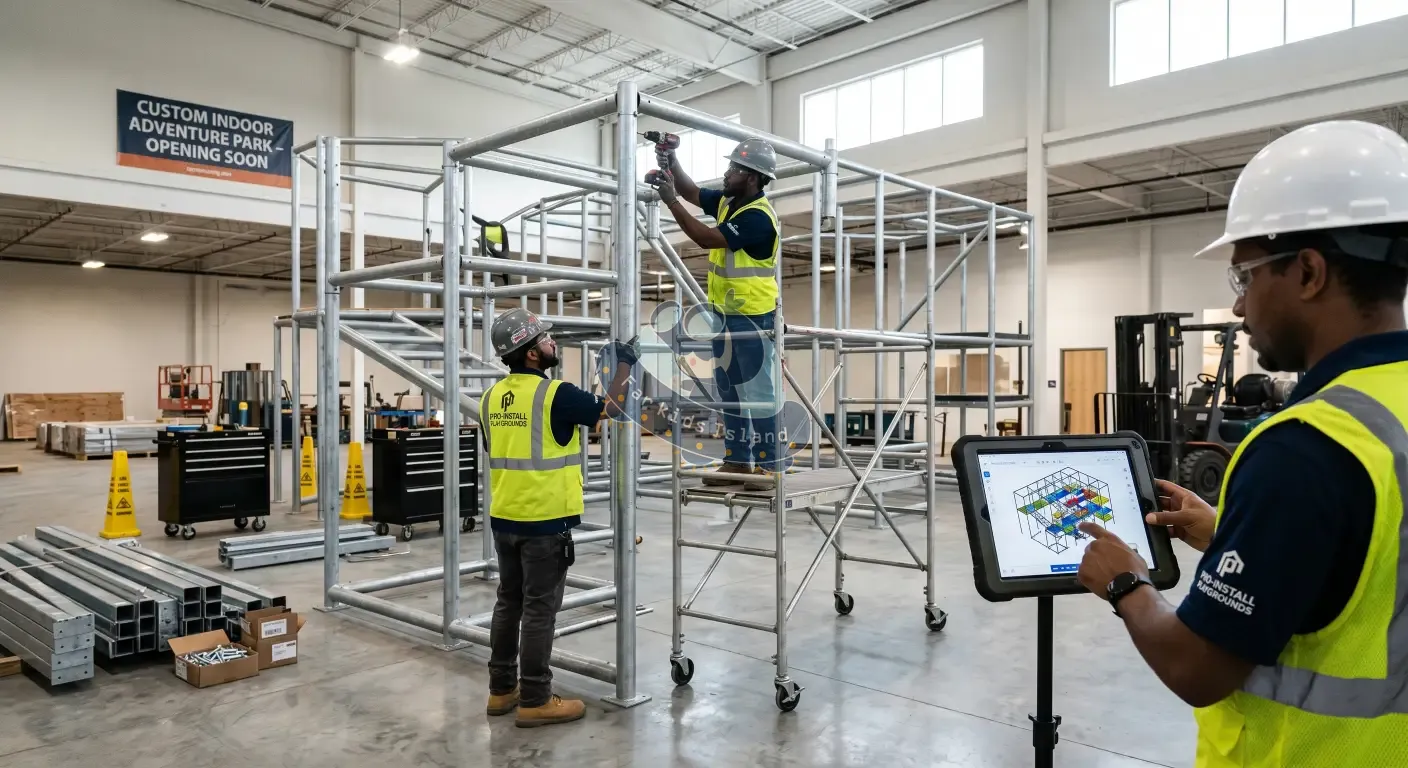
- Pre-Installation Assembly: The best factories will fully or partially assemble your structures in their warehouse before shipping. This guarantees that every bolt aligns perfectly on your actual job site, preventing costly installation delays.
Commercial-Grade Material Specifications
The visual difference between residential play sets and commercial indoor playground equipment is minimal in a 3D rendering, but the physical difference is vast. In high-traffic environments, inferior components degrade rapidly, so you must strictly evaluate the raw materials.
Galvanized Steel Frameworks for High-Traffic Loads
The hidden skeleton of your equipment is the most critical component. Look past the colorful exterior and investigate the metal framework:
- Wall Thickness: True commercial-grade playground materials require galvanized steel tubes with a minimum wall thickness of 2.0mm to 2.5mm to withstand the dynamic loading of running and jumping children.
- Anti-Corrosion Treatment: Demand hot-dip galvanization (HDG) rather than standard electro-galvanization. HDG provides a much thicker zinc coating (45–85 microns), which is essential to prevent internal rust in high-humidity indoor environments.
High-Density Padding and Tear-Resistant PVC
The soft components endure the highest daily mechanical abuse from shoes, zippers, and friction:
- Foam Density: Standard specifications mandate the use of EPE (Expanded Polyethylene) foam with a minimum density of 35 kg/m³. Low-density foam compresses quickly, leaving hard steel pipes dangerously exposed.
- PVC Durability: The outer PVC leather covering must be fire-retardant (meeting BS 5852 or similar international standards) and highly tear-resistant, ideally featuring a woven grid backing to prevent punctures from spreading.
Strict Adherence to Global Safety Standards
Safety is a strict legal requirement that dictates your ability to secure insurance and operational permits. You must partner with a supplier that engineers their products to meet rigorous indoor playground safety standards from the ground up.
Beyond the Paper: True ASTM and EN 1176 Compliance
It is not enough for a supplier to show you a generic safety certificate. You must ensure your specific layout meets established engineering guidelines:
- Critical Fall Height (CFH): Structures must be engineered with CFH calculations in mind. The manufacturer must specify the exact thickness and Head Injury Criterion (HIC) rating of the EVA or rubber impact-attenuating flooring required beneath high platforms.
- Safety Use Zones: Standards dictate that fall zones must extend horizontally beyond the footprint of the equipment (often up to 1.8 meters). Your supplier must account for this buffer in your floor plan.
How Professional Manufacturers Eliminate Entrapment Hazards
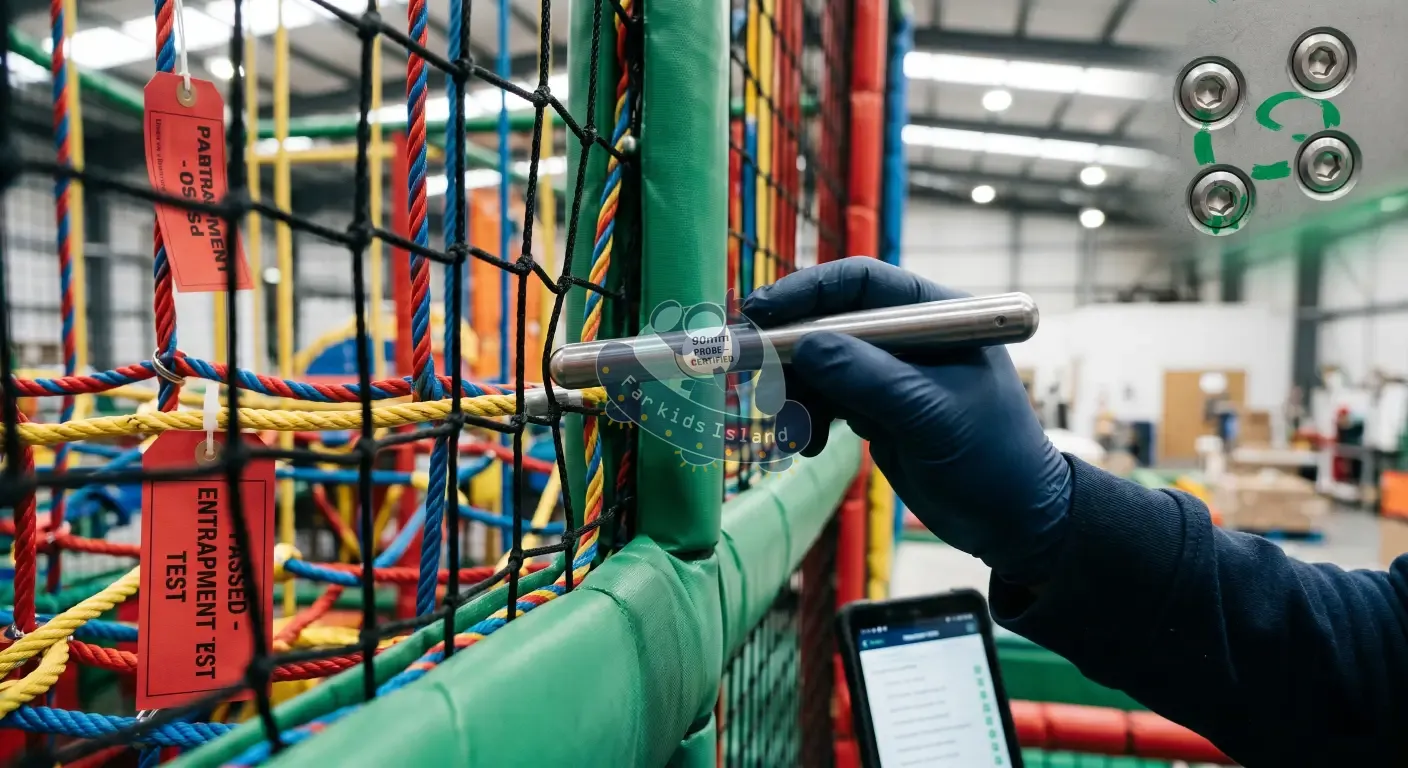
Entrapment is a primary focus of safety inspections. Premium manufacturers utilize precise engineering to prevent fingers, limbs, or heads from getting stuck:
- The Probe Test: Engineers use physical gauges to ensure all gaps and netting openings are strictly smaller than 89mm (to prevent head entry) or completely larger than 230mm (to allow easy withdrawal).
- Hardware Concealment: Every bolt, screw, and connection point must be recessed or covered with smooth, tamper-proof caps to prevent clothing snags and lacerations.
Custom Engineering and Space Planning Expertise
Structural columns, low-hanging HVAC ducts, and irregular floor plans are standard in commercial real estate. Overcoming these obstacles requires an experienced indoor playground supplier capable of executing precise spatial engineering rather than forcing a standard mold into your room.
Adapting Play Structures to Complex Floor Plans
A professional manufacturer approaches your venue as an engineering challenge:
- Obstacle Integration: Structural pillars can be heavily padded and seamlessly integrated into the climbing frames as support nodes, rather than being treated as dead space.
- Ceiling Clearances: High-quality custom indoor play structures are engineered with tiered heights to maintain a mandatory 1.5-meter safety clearance from architectural ceilings and fire sprinklers, ensuring tall children cannot reach hazardous overhead fixtures.
Scientific Traffic Flow and Age-Appropriate Zoning
A major part of spatial planning is understanding how children actually move to prevent collisions:
- Flow Management: High-activity zones (like trampolines and large slides) require separate, clearly defined entry and exit paths to prevent bottlenecks and reverse-climbing.
- Toddler Zoning: Designing a strictly separated area for ages 0-3 often involves sourcing wholesale soft play equipment for toddlers, featuring low-height modules, fully soft-bodied games, and thick perimeter barriers to keep older, faster children out safely.
Reliable Installation and After-Sales Support
The total cost of your equipment must be evaluated over a 5-to-10-year lifespan. Therefore, installation precision and ongoing maintenance support are crucial factors in your purchasing decision.
Professional Installation Guidance and 3D Manuals
Even the most durable equipment will fail if installed incorrectly:
- Detailed Documentation: Ensure the supplier provides comprehensive, step-by-step 3D exploded-view installation manuals where every steel pipe and connector is alphanumerically coded.
- Remote and On-Site Support: Elite manufacturers offer the option to dispatch an experienced installation supervisor to your site or provide 24/7 real-time remote video guidance to your local contractor team.
Warranties and Long-Term Maintenance Assistance
Investing in commercial equipment requires a safety net for long-term operations:
- Comprehensive Warranties: Look for clear, written warranties covering the steel framework for multiple years, alongside reasonable guarantees on wear-and-tear items like netting.
- Parts Availability: Because a true manufacturer owns their production tooling, they can quickly fabricate and ship exact replacement parts years after your initial purchase, ensuring your venue experiences zero prolonged downtime.
Frequently Asked Questions
Q1: How do I verify if a supplier is a real direct factory?
Ask for a live video tour of their production facility. A genuine manufacturer can walk you through their metalworking, painting, and sewing workshops in real-time, whereas trading companies will only show you a finished showroom.
Q2: What is the average lifespan of commercial indoor play equipment?
If manufactured with genuine commercial-grade materials (2.0mm+ steel, high-density EPE foam) and maintained properly, the core structural framework can last 10 to 15 years. Soft wear-and-tear parts (netting, PVC covers) typically require partial updates every 3 to 5 years.
Q3: Can the manufacturer help me pass local safety and fire inspections?
Yes. A reputable manufacturer will provide all necessary compliance documentation, including fire-retardant material certificates and engineering blueprints proving adherence to ASTM or EN structural safety guidelines, which are vital for securing local permit approvals.
Summary: Choosing a Long-Term Business Partner
Selecting the right manufacturing partner is an engineering and operational decision that forms the foundation of your entire business. By focusing on trusted factory skills, high-quality materials, and strict safety standards, you protect your investment from quick wear and serious legal issues. The manufacturer you choose must be capable of navigating complex floor plans and providing the long-term maintenance support necessary to keep your facility running smoothly.
For investors and facility owners looking for a proven, reliable partner, Far Kids Island delivers unmatched manufacturing expertise and comprehensive commercial solutions. Choose Far Kids Island to secure premium, highly durable play structures backed by dedicated after-sales support, ensuring your business thrives safely and profitably for years to come.

The Ultimate Comparison Guide: Choosing the Best Global Manufacturers for Custom Indoor Play Systems (2026)

Indoor Playground Equipment for Sale: The Ultimate 2026 Catalog [With Price Comparisons]

How to reduce the risk of Indoor playground?
The Ultimate Guide to Selecting and Planning Commercial Indoor Playground Equipment
About Far Kids IsIand
Who is Far Kids Island?
Far Kids Island is a professional playground solution provider specializing in indoor playgrounds, soft play equipment, and customized play environments for commercial use worldwide.
What types of playground projects do you specialize in?
We focus on indoor playgrounds, family entertainment centers (FECs), schools & kindergartens, shopping malls, community spaces, and themed commercial play projects.
Do you offer customized playground designs?
Yes. Every project is customized based on space size, target age groups, budget, theme preference, and local safety regulations.
Do you have your own design and manufacturing teams?
Do you have your own design and manufacturing teams?
Which countries or markets do you serve?
Which countries or markets do you serve?
Top Project Picks for Your Next Success

Have Questions or Need More Information?
Ready to Dive Deeper into This Topic?
Explore Detailed Insights and Start Applying Knowledge to Your Project
We’re here to help! Fill out the form below to reach out to our team. Whether you have a question about the article or need assistance with your project, we’re happy to assist you.
Trusted Playground Solution Provider
Professional one-stop indoor playground solutions with a strong focus on design, safety, and eco-friendly materials.
Our Location
No. 106, No. 27, Jiejin 2nd Road, Shiqiao Street, Panyu District, Guangzhou, China.
Say Hello
Social Links
Whatsapp: +8613632109166
TongShuo Toys
sullaguo
tongshuoplay
TONGSHUO
tongshuo_toys