


How to Clean Indoor Playground Equipment: A Commercial Cleaning & Sanitizing Guide
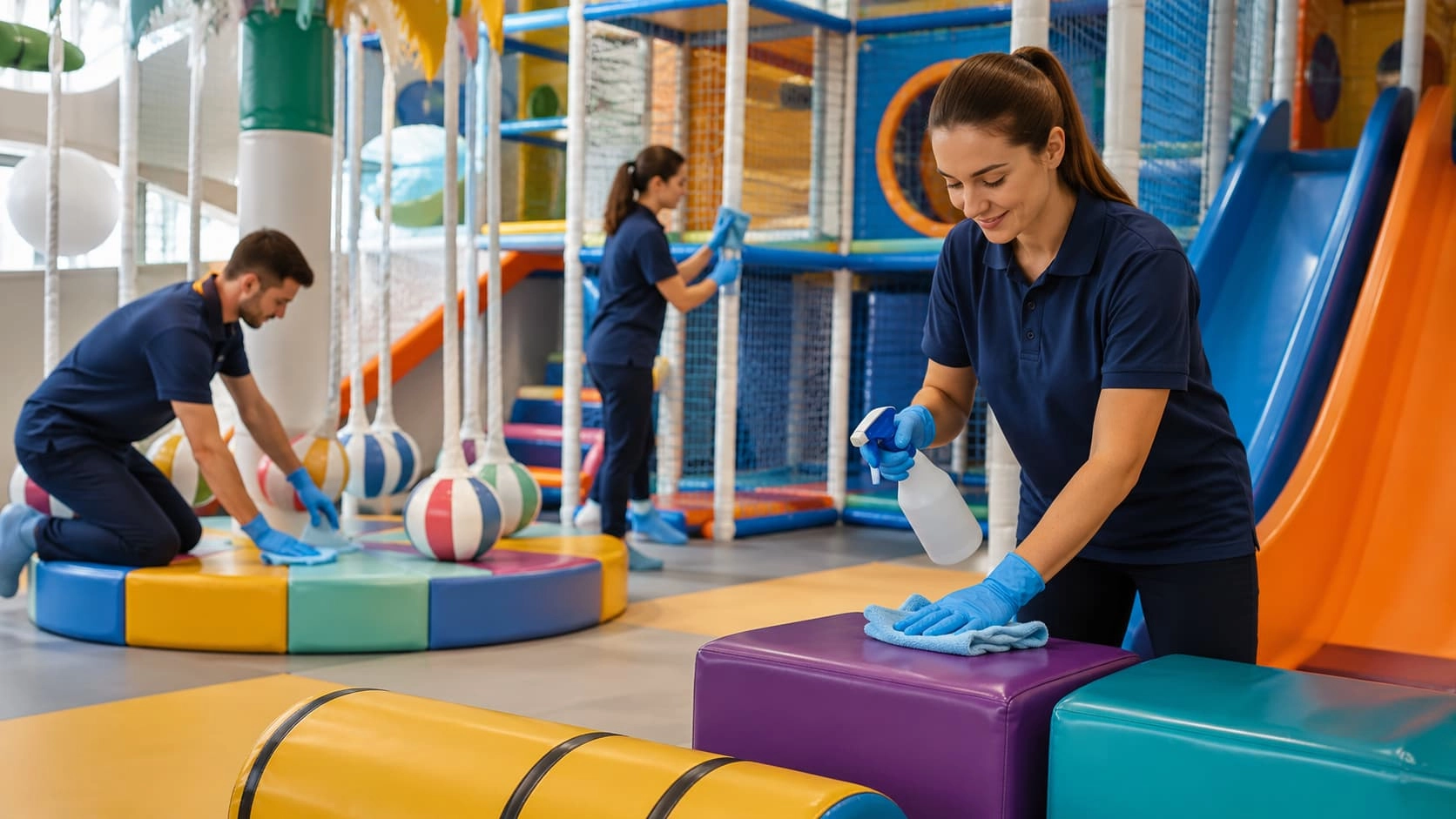
This guide is written for commercial indoor playground operators — FEC owners, school playrooms, shopping mall play centers, and play cafés — who need a practical, repeatable cleaning and sanitizing routine. Maintaining a visibly clean facility isn't just a behind-the-scenes chore; it's something parents notice directly, and it protects the equipment investment over the long run. This guide covers daily, weekly, and monthly maintenance steps for soft play areas, slides, safety netting, and ball pits.

Indoor play equipment gets touched, climbed on, and explored constantly by children — which makes hygiene a more central part of facility operations than for most retail or hospitality businesses. This guide walks through the distinction between cleaning, sanitizing, and disinfecting; a practical schedule; material-specific steps; and the most common mistakes that damage equipment rather than protect it.
Why Cleaning Matters for Commercial Indoor Playground Operators
When parents walk into a facility, hygiene is one of the first things they notice, consciously or not. A visibly dirty surface or lingering odor can affect a venue's reputation quickly, and word travels fast through parent networks and online reviews.
Beyond the customer-facing side, consistent cleaning also protects the physical equipment. Sweat, tracked-in dirt, and spilled beverages contain substances that can gradually degrade commercial-grade materials over time. A disciplined cleaning routine helps components stay in better condition for longer and can reduce the frequency of costly replacements.
Protecting Children and Supporting Parent Trust
Because children frequently touch shared surfaces during play, high-contact areas may contribute to the spread of common germs if they are not cleaned regularly. Maintaining a visibly clean facility — and especially having staff clean during visible operating hours — tends to build parent confidence, which supports longer visits and repeat business.
Extending the Lifespan of Commercial Play Equipment
Accumulated grime can act almost like fine abrasive material against plastic slides and PVC covers over time, contributing to micro-scratches that make surfaces look dull and become more brittle. Regular, gentle cleaning helps preserve material flexibility and supports passing routine safety inspections without unnecessary findings.
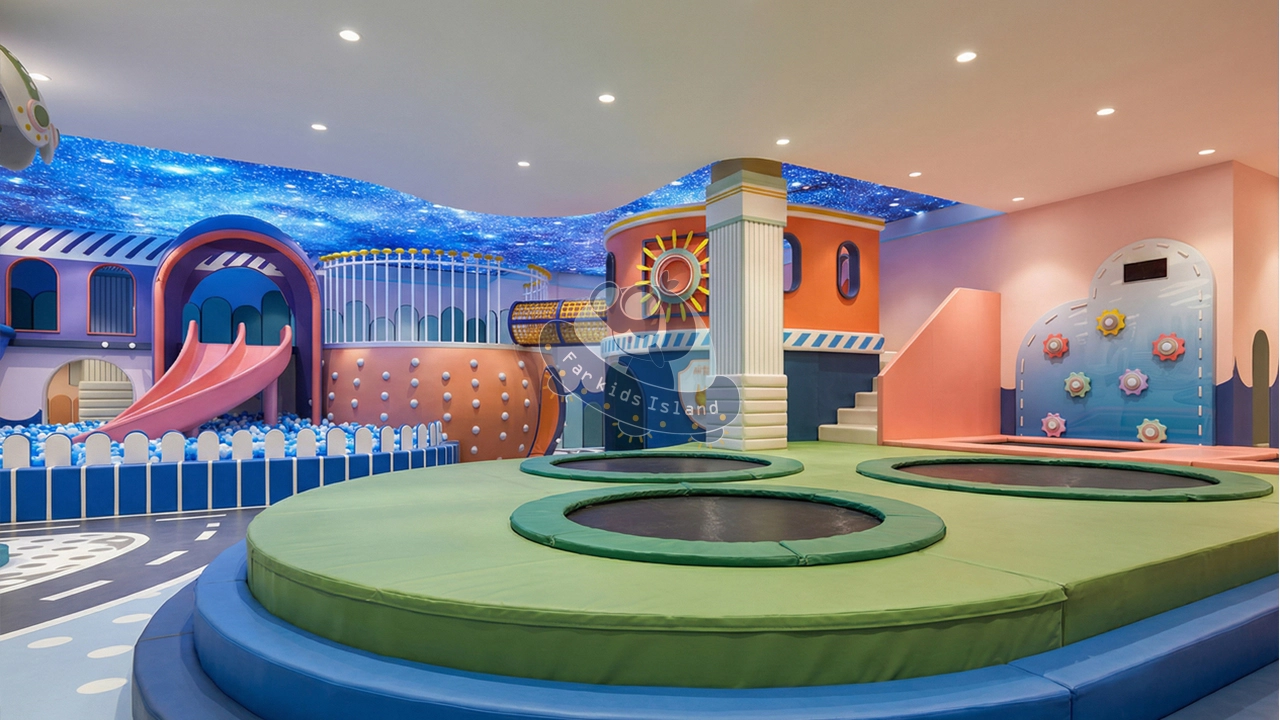
Procurement tip: Easy maintenance often starts at the procurement stage. Choosing easy-to-clean commercial indoor playground equipment made with high-density PVC, rotomolded plastics, and accessible structures can meaningfully reduce daily labor going forward.
Cleaning vs. Sanitizing vs. Disinfecting: What Operators Should Know
These three terms describe distinct processes, and confusing them is a common operational mistake. Spraying a disinfectant onto a visibly dirty surface, for instance, generally won't achieve real disinfection — organic soil can shield germs from the chemical, which is why cleaning always needs to happen first.
| Process | What It Does | Typical Method | Goal |
|---|---|---|---|
| Cleaning | Physically removes visible dirt, dust, and debris | Water, mild soap, and scrubbing | Clears the surface so sanitizers/disinfectants can actually reach it |
| Sanitizing | Reduces bacteria to a safer level | Chemical solution applied with a specified “dwell time” | Lowers bacteria on high-touch surfaces like grips and panels |
| Disinfecting | Destroys or inactivates specific targeted pathogens | Stronger formulas with a longer dwell time | Used for deep cleans or after a known biological spill |
This sequence — clean, then sanitize or disinfect — is consistent with how public health guidance generally frames indoor play area maintenance: clean first to remove visible soil, then apply the appropriate chemical step. Always follow the product label, the Safety Data Sheet (SDS), and the equipment manufacturer's care instructions, since dwell times and dilution ratios vary by product and aren't universal.
Essential Supplies for Indoor Playground Cleaning
Using the wrong chemicals — strong solvents or high-concentration bleach, for example — can damage plastics, cloud acrylic panels, and dry out vinyl covers until they crack. A few sourcing guidelines worth following:
Choosing Child-Safe Cleaning Chemicals
- Check the label and SDS — confirm the product is registered and labeled as appropriate for use in childcare or similar public-facing environments, and follow the manufacturer's dilution and dwell-time instructions exactly.
- Lower-irritant formulas — where possible, choose products free of strong artificial fragrances and unnecessary dyes, which can be more likely to bother sensitive children.
- Avoid harsh chemical classes — ammonia, acetone, and high-concentration unbuffered chlorine are generally not appropriate for routine use on play equipment surfaces.
Useful Cleaning Tools
- Microfiber cloths — commonly used because they can help capture fine dust and surface residue more effectively than many basic cloths.
- Electrostatic sprayers — help distribute chemical solution evenly across complex shapes.
- HEPA-filter vacuums — useful for fine dust and allergens on structural surfaces and netting.
- Flexible squeegees — make it easier to reach the interior of enclosed plastic crawl tubes.
Daily, Weekly and Monthly Indoor Playground Cleaning Schedule
A structured schedule spreads the workload across staff and time, rather than relying on reactive, ad-hoc cleaning that lets dust and bacteria build up in less visible areas. For commercial indoor playground cleaning, operators should build a routine that covers high-touch surfaces, soft play equipment cleaning, ball pit cleaning, and monthly equipment inspection.
| Frequency | Tasks |
|---|---|
| Daily | Sanitize high-traffic entry gates, turnstiles, and ticketing counters · Sanitize toddler soft play foam shapes and ground-level interactive panels · Wipe down handrails, safety barriers, and slide exit bases |
| Weekly | Scrub interior crawl platforms on multi-level frames · Wipe down the interior and exterior of plastic tube slides · Vacuum fine dust from beneath ground cushions and padding gaps |
| Monthly | Dust and vacuum high-level safety netting using extendable poles · Inspect and sanitize structural steel connectors and joints · Fully empty, wash, and sanitize the ball pit |

How to Clean Different Indoor Playground Materials
A commercial indoor playground combines soft foam padding, rigid plastics, woven netting, and structural steel — and each material reacts differently to moisture, abrasion, and chemical exposure. A scrub brush appropriate for a textured plastic surface, for instance, can tear soft PVC vinyl covers.

Soft Play PVC and Foam Pads
- Wipe the surface with a damp microfiber cloth and a mild, neutral-pH soap solution to lift surface oils.
- Apply a light mist of a child-safe cleaning product approved for this surface type.
- Let the solution sit for the dwell time specified on the label, then wipe completely dry to prevent moisture from entering the seams.
For operators comparing new layouts, choosing durable soft play equipment with smooth PVC surfaces and sealed edges can make routine cleaning easier in high-traffic commercial environments.
Plastic Tube Slides and Interactive Panels
- Wipe rotomolded polyethylene and acrylic panels with a non-abrasive microfiber cloth.
- Use a mild commercial degreaser for handprints and grease marks.
- Avoid abrasive scrubbing pads or scouring powders — these tend to create micro-scratches that trap dirt rather than remove it.
Safety Netting and Steel Frames
- Use a soft brush attachment on a HEPA-filter vacuum.
- Vacuum woven safety netting from top to bottom to remove lint and dust.
- Wipe structural steel framing with a damp cloth and check that protective foam sleeve fasteners are secure.
Design and Material Planning
A maintenance-friendly indoor playground design should consider cleaning access, ventilation, material durability, and staff inspection routes from the planning stage. This prevents cleaning from becoming an afterthought after installation.
How to Clean a Ball Pit Safely and Efficiently
The ball pit is typically the highest-traffic attraction in a venue, which makes it one of the more demanding cleaning tasks. Both manual and automated approaches are common, depending on venue scale.

Manual Method
- Sorting and extraction — scoop balls into mesh laundry bags, setting aside any cracked or damaged balls for disposal.
- Chemical bath — submerge the mesh bags in a tub of warm water with an appropriate sanitizing solution, agitating to remove grease and grime.
- Base cleaning — while balls air-dry in a ventilated area, vacuum the empty pit floor and scrub the surrounding padded walls.
Automated Ball Washing Machine
- Suction — the machine's hose connects to the pit and vacuums balls into the system; actual throughput depends on the specific machine model and ball volume, so check manufacturer specs for your equipment.
- Scrubbing and UV exposure — balls pass through a motorized brush chamber, often combined with child-safe sanitizer and UV exposure.
- Drying and return — air blowers dry the balls before they're discharged back into the cleaned, vacuumed pit.
| Cleaning Method | Typical Labor Time | Sanitizing Consistency | Best Commercial Application |
|---|---|---|---|
| Manual hand wash | Several hours, usually with 2+ staff | More variable — depends on technique | Small cafés, daycares, toddler corners with fewer balls |
| Automated machine | Generally faster, often 1 operator | More consistent across batches | Large FECs, malls, high-traffic venues |
Operator note: Actual cleaning time and machine throughput vary by model, ball count, and venue setup — confirm specifics with your equipment manufacturer.
Common Cleaning Mistakes That Damage Indoor Playground Equipment
A few mistakes show up repeatedly among untrained maintenance staff:
Avoid These Maintenance Errors
- Masking odors instead of finding the source — heavy air fresheners can irritate sensitive children and signal to parents that the facility isn't being genuinely deep-cleaned.
- Using saturated mops or high-pressure water inside a play frame — excess water can get past vinyl stitching and saturate foam padding, creating conditions where mold and mildew can develop out of sight.
- Skipping drying time — equipment should dry fully before children resume play. Dry time varies by product, surface type, ventilation, and chemical instructions.
- Using abrasive pads or harsh solvents — these damage plastic and vinyl surfaces faster than the dirt itself would.
Maintenance-Friendly Equipment Starts with Better Design
Cleaning workload isn't determined only by staff effort — equipment design plays a real role in how much daily maintenance a facility needs. A few design factors worth asking a manufacturer about:

Material Selection
High-density PVC and rotomolded plastics generally hold up to repeated cleaning better than lower-grade alternatives. Operators should also ask about safe and durable playground materials before finalizing equipment specifications.
Modular Structure
Components that can be removed or accessed individually make targeted cleaning and replacement easier than fully integrated builds.
Ball Pit Access
A design with clear access points for vacuuming and washing reduces the time needed for monthly deep cleans.
Rounded Edges and Sealed Seams
Rounded edges and sealed seams reduce the places where dirt and moisture can collect and become harder to reach.
For investors building new venues, turnkey indoor playground solutions can reduce the risk of overlooking cleaning access and long-term maintenance needs. Reviewing real indoor playground project cases can also help operators understand how different layouts affect daily cleaning workload.
Far Kids Island factors maintenance access into equipment design from the engineering stage, which is worth discussing directly with any manufacturer during the planning process.
FAQ
Can I use bleach to sanitize my indoor playground?
Generally not recommended for routine use — high-concentration chlorine bleach can discolor and degrade PVC covers, cloud acrylic panels, and release fumes that may irritate children's respiratory systems. Use products specifically labeled for this type of surface instead.
How long should we wait before letting kids play after sanitizing?
Follow the dwell and dry time on the product label — this commonly falls in the range of 15 to 20 minutes, but it varies by product, so check the specific instructions for the chemical used.
How often should the ball pit be completely emptied and cleaned?
In high-traffic commercial venues, a full empty, vacuum, and sanitize cycle is commonly done at least every two weeks, though higher-traffic venues may need more frequent cycles — actual frequency should reflect your specific visitor volume.
What's the difference between cleaning, sanitizing, and disinfecting?
Cleaning physically removes visible dirt; sanitizing reduces bacteria to a safer level; disinfecting targets and inactivates specific pathogens. They're sequential steps, not interchangeable terms — see the comparison table above.
How often should daily cleaning tasks be done?
High-touch surfaces — entry gates, handrails, toddler soft play panels — generally need sanitizing at least once daily, with more frequent spot-cleaning during especially busy periods.
Can equipment design reduce cleaning workload?
Yes — material choice, modular construction, and accessible ball pit design all affect how much daily and monthly maintenance a facility actually needs. This is worth discussing with a manufacturer at the planning stage, not after installation.
Conclusion
A consistent, material-specific cleaning routine protects both child safety and the long-term condition of commercial play equipment. Clear scheduling, the right supplies, and an understanding of how cleaning, sanitizing, and disinfecting differ all contribute to a facility that holds up well — and one that parents notice is genuinely well cared for.
If you're planning a new facility or expanding an existing one, partnering with an indoor playground equipment manufacturer that designs with maintenance in mind from the start can meaningfully reduce ongoing labor.
Contact Far Kids Island


Whatsapp: +8613632109166
TongShuo Toys
sullaguo
Far kids island
TONGSHUO
Guo Wenshu