





indoor soft play equipment Manufacturer vs Supplier: Which Fits?
- Comparing direct production with a coordinated sourcing partner
- What a manufacturer typically contributes
- What a supplier or project integrator typically contributes
- How to assess safety, quality, and project risk
- Ask for evidence that matches the proposed design
- Evaluate quality systems and maintenance realities
- Match the commercial model to the venue and procurement plan
- Use the quotation process to expose hidden scope gaps
- Consider lifecycle value as well as opening cost
- Where our product scope can support a broader venue plan
- Build a clear brief before requesting a proposal
- Confirm deliverables before selecting a partner
- Frequently Asked Questions
For a commercial play venue, choosing an indoor soft play equipment manufacturer or supplier is a decision about accountability, customization, coordination, and long-term support. A manufacturer typically controls or oversees production and may offer greater visibility into materials and fabrication; a supplier may source products from one or more factories and coordinate a broader package. Neither model is automatically better. Buyers should verify who designs the play system, who owns quality checks, which standards and local rules apply, what is included in installation, and who responds when components need repair or replacement.
Comparing direct production with a coordinated sourcing partner
The labels “manufacturer” and “supplier” are not always used consistently in the commercial play industry. Some manufacturers sell directly, while some suppliers operate design, engineering, installation, or service teams. Procurement decisions should therefore begin with the actual scope of work and the legal entity responsible for each deliverable, rather than assumptions based on a company’s title.
What a manufacturer typically contributes
A manufacturer is generally responsible for producing some or all of the play components, such as padded structures, platforms, barriers, slides, climbing features, or trampoline elements. Direct access to production can help project owners discuss dimensions, colorways, material options, component interfaces, and revisions with the party making the equipment. It can also make it easier to request product specifications and understand how quality checks are applied before dispatch.
That access does not guarantee a complete project solution. A factory may not provide site measurement, architectural coordination, local permitting support, shipping management, installation, or ongoing maintenance. Buyers should establish whether those services are offered directly, subcontracted, or excluded. For a custom facility, a production quote without clear drawings, installation responsibilities, and site assumptions can leave significant cost and schedule risks unresolved.
What a supplier or project integrator typically contributes
A supplier may source equipment from multiple manufacturers and package products with design coordination, freight, installation, or after-sales support. This can suit operators who prefer one commercial contact for a mixed scope, such as a soft-contained play zone combined with a trampoline area, toddler space, party rooms, or reception equipment. The supplier can also help coordinate product interfaces when components come from different production sources.
The trade-off is that buyers may have less direct visibility into the factories, materials, and production controls behind each item. A supplier’s ability to resolve a warranty issue can depend on its agreements with the original maker. Ask for the manufacturer’s identity, the supplier’s role in design and inspection, and a written process for handling defects, spare parts, and service requests.
| Decision factor | Direct manufacturer route | Supplier or integrator route |
|---|---|---|
| Production visibility | May provide direct access to factory specifications and production discussions; verify which components are made in-house. | May rely on information from one or more manufacturing partners; request source and product documentation. |
| Customization | Can be a good fit when changes involve fabrication, dimensions, or component configuration, subject to engineering limits. | Can coordinate a broader package, but changes may require approval across multiple makers. |
| Project coordination | May require the buyer to separately appoint designers, shippers, installers, or local contractors. | May consolidate coordination and communication if those services are explicitly included. |
| Product range | Usually strongest in the maker’s own product categories and production capabilities. | May combine products from several categories or manufacturers under one procurement scope. |
| Warranty and service | Can provide a direct route to the production source, but local service coverage must be confirmed. | May offer a single service contact; confirm response times, parts access, and responsibility for third-party products. |
| Best fit | Projects prioritizing production access, defined custom components, or direct technical discussions. | Projects prioritizing consolidated sourcing, multiple product categories, or coordinated delivery and installation. |
This comparison describes common business models, not a guarantee of capability. Commercial terms vary by company and project, so each service, responsibility, and exclusion should be recorded in the quotation and contract.
How to assess safety, quality, and project risk
Play structures are used by children and require more than visual appeal. A procurement review should consider the intended age groups, supervision model, user capacity, fall and impact hazards, entrapment risks, material performance, cleaning routines, and the relationship between equipment layout and the building. The applicable requirements depend on the product type, jurisdiction, venue, and project design. Buyers should confirm requirements with qualified professionals and relevant local authorities rather than treating a supplier’s general compliance statement as project-specific approval.
Ask for evidence that matches the proposed design
Request current drawings, specifications, material descriptions, inspection records, and documentation identifying the standards or test methods relevant to the supplied equipment. ASTM F1918, Standard Safety Performance Specification for Soft Contained Play Equipment, is a reference buyers can review when evaluating applicable requirements for soft-contained play systems. Its relevance should be confirmed for the specific product, edition, and jurisdiction; citing a standard does not by itself prove that an entire venue or installation complies.
For broader playground planning context, the U.S. Consumer Product Safety Commission’s Public Playground Safety Handbook discusses playground hazards and safety considerations. It is guidance for public playgrounds, so it should not be treated as a substitute for requirements governing a particular indoor commercial facility. Ask the project team to explain which references apply and how the installation will be assessed.
Evaluate quality systems and maintenance realities
A quality-management certificate can indicate that an organization operates a documented management system, but it does not certify every product or establish that a particular play structure is safe. The ISO overview of ISO 9001 explains the standard’s focus on quality management systems. Buyers should check the certificate’s issuing body, scope, validity, and named organization, then separately request product-level evidence and inspection procedures.
Quality also includes the ability to keep the venue operating. Ask which wear parts can be replaced, whether matching colors and dimensions can be reordered, how repair requests are logged, and whether maintenance instructions are supplied. Clarify who performs routine inspections, who is qualified to repair structural or padded elements, and how damaged areas should be isolated until fixed. A low initial price may be less attractive if replacement components are difficult to obtain or support responsibilities are unclear.
Match the commercial model to the venue and procurement plan
The best route depends on how much coordination the project owner can manage internally. A single-site operator with a defined layout and an experienced local contractor may benefit from working directly with a production source for selected custom elements. A first-time investor building a complete family entertainment center may prefer a supplier or integrator that can coordinate several equipment categories and delivery stages. In either case, the contract should identify the party responsible for drawings, site data, production approval, freight, unloading, installation, commissioning, and handover.
Use the quotation process to expose hidden scope gaps
Provide every bidder with the same site plan, ceiling heights, structural information, access constraints, target age range, expected operating model, and opening date. Ask for a line-item proposal that separates equipment, customization, packaging, shipping, duties where applicable, installation, travel, training, and optional services. Request the assumptions behind capacity estimates and confirm whether the proposed layout leaves adequate access for supervision, cleaning, emergency response, and maintenance.
Compare lead times from drawing approval—not simply from the date of purchase order—and ask what events can change the schedule. Confirm who signs off on shop drawings, how design changes are priced, and whether late site changes affect production or freight. Where the scope involves multiple vendors, appoint one party to maintain the master schedule and resolve interface questions. These steps help prevent a finished product from arriving before the venue is ready to receive or install it.
Consider lifecycle value as well as opening cost
Revenue potential depends on the full operating model, not only the equipment itself. Buyers should evaluate how the layout supports age-appropriate play, party bookings, food and beverage service, repeat visits, and staff visibility. Estimate total cost of ownership using the purchase price plus freight, installation, inspections, cleaning, repairs, replacement parts, and downtime. Ask vendors to distinguish confirmed service commitments from general marketing language, and include measurable response expectations where service availability is important.
Where our product scope can support a broader venue plan
For buyers assessing our product scope, our listed categories include indoor playground equipment and trampoline park equipment. These categories can serve different activity zones within a family entertainment center, subject to the site layout, target customers, applicable rules, and project specification. Because no company-specific manufacturing profile or service details are provided here, project owners should verify directly which items are produced by our organization, which are sourced, and which design, installation, or maintenance services are available for their location.
Build a clear brief before requesting a proposal
A useful inquiry describes the venue type, city and country, usable floor area, ceiling height, target age groups, expected attendance, preferred activities, budget range, and target opening date. Include architectural drawings or site photographs where possible. For a combined play and trampoline concept, identify how guests will move between zones and whether separate supervision, access control, or operating procedures are planned. This information gives the commercial team a clearer basis for recommending product categories and identifying details that still require engineering review.
Confirm deliverables before selecting a partner
Before placing an order, buyers should request a written scope covering equipment descriptions, drawings, documentation, inspection steps, packing, delivery terms, installation responsibilities, handover materials, warranty coverage, spare-part availability, and the procedure for resolving nonconformities. Confirm product origin and the party accountable for each component. Our product categories can be considered as part of that assessment, while final suitability depends on the project requirements and verified capabilities associated with the specific proposal.
Contact our team to discuss your venue requirements or review our indoor playground and trampoline park product options.
Frequently Asked Questions
What is the difference between an indoor play equipment manufacturer and a supplier?
A manufacturer typically produces some or all of the equipment, while a supplier may source products from one or more factories and coordinate a broader package. Some companies perform both roles, so buyers should verify who makes each component and who is responsible for design, installation, quality checks, and support.
Is it better to buy directly from a manufacturer or through a supplier?
Neither option is automatically better. Direct purchasing can suit projects that prioritize production access or custom components. A supplier may suit buyers who want consolidated sourcing or coordination across multiple product categories. Compare the actual scope, accountability, and service commitments.
What documentation should buyers request before ordering commercial play equipment?
Request product specifications, drawings, material information, relevant standards or test documentation, inspection procedures, warranty terms, maintenance guidance, and details identifying the responsible manufacturer. Confirm that the documentation applies to the proposed equipment and project jurisdiction.
Does an ISO 9001 certificate prove that play equipment is safe?
No. ISO 9001 concerns an organization’s quality management system; it does not by itself certify a specific product or prove that an installation is safe. Buyers should separately review relevant product documentation, inspection procedures, and applicable local requirements.
What should a project quote include besides the equipment price?
A detailed quote should clarify customization, drawings, packaging, shipping, applicable duties, installation, travel, training, site assumptions, schedule milestones, warranty coverage, spare parts, and excluded services. Confirm responsibility for unloading, commissioning, and handover.
How can buyers compare the lifecycle cost of play equipment?
Assess the purchase price alongside freight, installation, inspections, cleaning, repairs, replacement parts, service access, and potential downtime. Check whether spare parts can be reordered and whether service response expectations are documented.
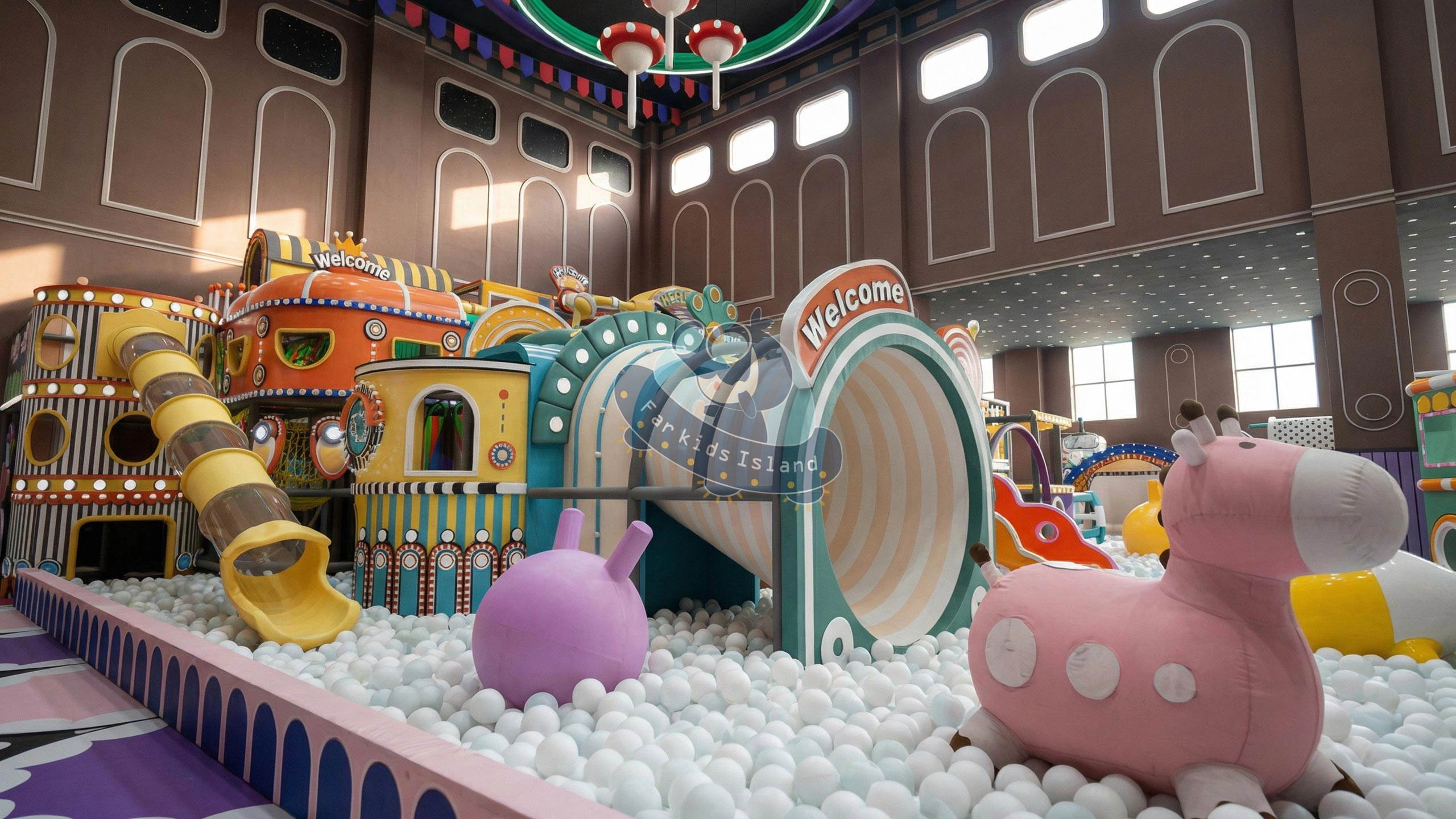
Far Kids Island Dream Carnival Adventure Indoor Playground (UAE)
Maintenance Plan for Your Custom Indoor Playground Project
Age-Specific Play Zones: Equipment Selection Tips
Key Features to Evaluate When Selecting Family Entertainment Center Equipment Suppliers
Top Project Picks for Your Next Success


Have Questions or Need More Information?
Ready to Dive Deeper into This Topic?
Explore Detailed Insights and Start Applying Knowledge to Your Project
We’re here to help! Fill out the form below to reach out to our team. Whether you have a question about the article or need assistance with your project, we’re happy to assist you.
Trusted Playground Solution Provider
Professional one-stop indoor playground solutions with a strong focus on design, safety, and eco-friendly materials.
Our Location
No. 106, No. 27, Jiejin 2nd Road, Shiqiao Street, Panyu District, Guangzhou, China.
Say Hello
Social Links
Whatsapp: +8613632109166
Far kids island
Far kids island
Far kids island
TONGSHUO
Guo Wenshu