





Indoor Playground Equipment Cost and Safety Standards: How Compliance Affects Procurement Decisions
- How safety compliance shapes the investment in indoor play venues
- Start with the project’s jurisdiction and activity mix
- Translate standards into procurement requirements
- Budget for the complete installed scope
- Compare proposals by scope, evidence, and lifecycle value
- Use a like-for-like bid comparison
- Assess documentation and change control
- Evaluate supplier quality without confusing it with product approval
- Build compliance into product selection and long-term operation
- Balance play value, capacity, and maintainability
- Our product focus and the information buyers should request
- Plan inspections and maintenance before opening
- Frequently Asked Questions
Indoor playground equipment cost is shaped by the play concept, facility dimensions, user capacity, materials, installation scope, and the safety requirements that apply in the project’s location. Compliance affects procurement by influencing design choices, testing and documentation needs, installation procedures, and ongoing inspection budgets. Buyers can make more reliable comparisons by defining the applicable standards before requesting quotations, checking that supplier proposals cover equivalent scope, and evaluating lifecycle costs alongside initial capital expenditure.
How safety compliance shapes the investment in indoor play venues
Start with the project’s jurisdiction and activity mix
There is no single global rulebook for every indoor play facility. Requirements depend on where the venue operates, how the equipment is used, who owns or manages the site, and which activities are included. A soft-play structure for young children, a climbing feature, a rope course, and a trampoline court may fall under different technical standards or local requirements. Buyers should confirm applicable rules with the authority having jurisdiction, the project’s design professionals, and qualified testing or inspection providers before freezing the layout.
For example, ASTM International publishes ASTM F1918, a safety performance specification for soft contained play equipment. Trampoline courts are addressed by a separate standard, ASTM F2970, covering design, manufacture, installation, operation, maintenance, inspection, and major modification. These references help buyers identify the relevant technical conversation, but the contract should specify the standard edition and confirm whether local legislation or other standards also apply.
Translate standards into procurement requirements
Safety compliance is most useful when it becomes a measurable part of the tender rather than a general promise in a sales presentation. Ask bidders to identify the standards used for each equipment category, the design assumptions behind the proposal, and the records that will be delivered at handover. Depending on the jurisdiction and project scope, useful records may include drawings, material specifications, test or inspection reports, installation instructions, operating limits, maintenance schedules, and staff training materials.
Buyers should distinguish product conformity from a supplier’s management-system certification. A quality management certificate may indicate that a company operates a defined quality process, but it does not independently prove that a particular play structure meets a product safety standard. Likewise, a certificate for one component does not automatically validate the complete installed system. Procurement teams should request evidence tied to the actual equipment configuration, intended users, and installation site.
Budget for the complete installed scope
A quotation can appear less expensive because it excludes freight, customs charges, site preparation, access equipment, installation, surfacing, electrical work, inspections, or operator training. Those exclusions can materially change the project’s total outlay. Buyers should also clarify whether the quoted design includes all necessary protective surfacing, barriers, access points, and transitions between play zones, as well as who is responsible for coordinating those items with the building contractor.
Lifecycle expenses deserve similar attention. High-use venues may need frequent inspections, replacement parts, cleaning materials, and planned refurbishment. A lower initial offer may become a more expensive option if wear-prone components are difficult to replace, spare parts have long lead times, or maintenance instructions are incomplete. A practical financial comparison therefore considers initial supply and installation, expected operating costs, downtime exposure, and the cost of maintaining the equipment in a safe condition.
Compare proposals by scope, evidence, and lifecycle value
Use a like-for-like bid comparison
Before evaluating prices, create a common scope sheet that describes the facility, target age groups, expected user throughput, activities, usable ceiling height, access constraints, and project schedule. Require each supplier to identify included and excluded work against the same brief. This process helps separate a genuine price advantage from a proposal that simply provides fewer features or transfers installation and compliance responsibilities to the buyer.
| Procurement item | What to compare | Potential budget or delivery effect |
|---|---|---|
| Equipment configuration | Activities, dimensions, capacity assumptions, materials, and included components | Different layouts and specifications make headline quotations non-equivalent |
| Compliance evidence | Applicable standard, edition, documentation, and any testing or inspection scope | Missing evidence can require additional review, testing, redesign, or approval work |
| Installation and site work | Freight, unloading, access, anchoring, surfacing, utilities, and contractor responsibilities | Exclusions can create separate costs and affect opening dates |
| Operations and maintenance | Inspection frequency, staff training, spare parts, cleaning, and repair procedures | Influences recurring expense, equipment availability, and planned downtime |
| Warranty and service | Coverage period, exclusions, response arrangements, and parts availability | Changes the buyer’s exposure to repair costs and service delays |
This comparison is a procurement framework, not a market price survey; actual amounts depend on project design, location, site conditions, and the contracted scope. For public-playground context, the U.S. Consumer Product Safety Commission provides a Public Playground Safety Handbook. Its guidance should not be treated as a substitute for indoor-specific standards or local approvals, but it illustrates why hazard reduction, inspection, and maintenance belong in the owner’s planning process.
Assess documentation and change control
Equipment proposals often evolve during value engineering, architectural coordination, or late-stage site changes. Buyers should establish a formal process for approving substitutions and design revisions. A change to a platform height, netting arrangement, protective surface, connector, or activity can affect the safety assessment and should not be treated as a purely commercial adjustment. The supplier should explain whether revised drawings or additional review are needed before manufacture or installation proceeds.
At handover, project owners should receive the documents needed to operate and maintain the installed configuration. The operating manual should match the delivered equipment, explain age or use restrictions where applicable, and identify inspection and maintenance tasks. Facility teams should know how to document daily or routine checks, report defects, restrict access when a hazard is found, and record repairs. A clear paper trail supports consistent operations and helps the owner demonstrate that safety responsibilities are being managed.
Evaluate supplier quality without confusing it with product approval
Supplier assessment should cover more than a certificate logo. Buyers can ask how design reviews are documented, how materials and components are traced, how nonconforming items are handled, and how installation quality is verified. If a manufacturer presents an ISO management-system certificate, verify its scope, issuing body, and validity. ISO 9001 describes quality management systems; it is not a playground equipment safety standard and does not replace project-specific compliance evidence.
References from comparable installations can help buyers assess whether a supplier understands the practical demands of the intended venue, but references should be considered alongside technical documentation and a clearly allocated scope of work. Ask who is responsible for coordination among the equipment supplier, general contractor, architect, local inspector, and facility operator. Clear accountability reduces the risk that an important compliance task is assumed to belong to another party.
Build compliance into product selection and long-term operation
Balance play value, capacity, and maintainability
A high-feature design is not automatically the best commercial choice. Project owners need to balance the desired guest experience with age-appropriate use, realistic throughput, supervision requirements, floor area, ceiling height, and the ability to inspect and clean the equipment. Accessible maintenance points and replaceable wear components can help limit disruption. If the venue combines soft play with attractions such as trampolines, each activity should be evaluated according to its intended use and applicable safety requirements rather than treated as one undifferentiated package.
Capacity assumptions should be reviewed carefully because the number of children a layout can physically accommodate is not necessarily the number staff can supervise safely or the number the business can serve effectively. Consider circulation, queuing, sightlines, entry and exit control, party operations, and emergency access. These operational factors can affect layout changes, staffing plans, and the value of the investment even when they do not appear as separate equipment line items.
Our product focus and the information buyers should request
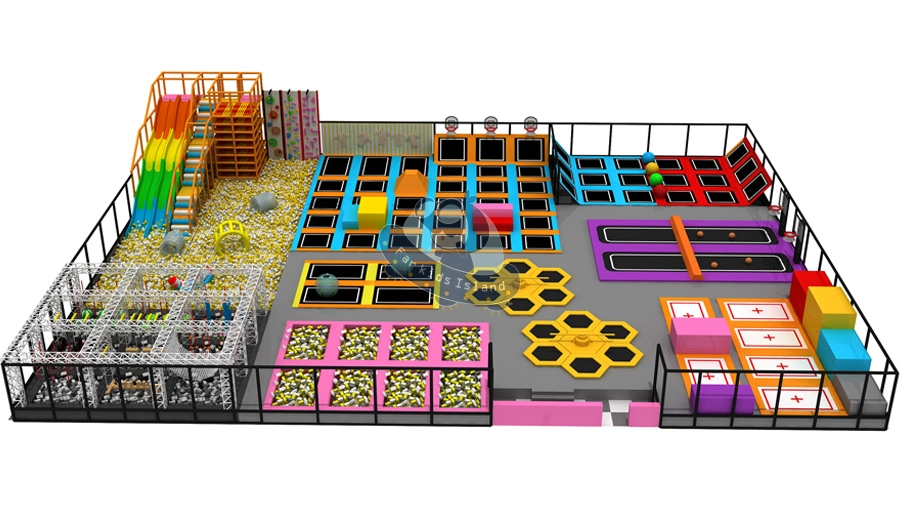
Our product focus includes indoor playground equipment and trampoline park equipment for commercial play environments. For procurement teams considering these categories, a useful starting point is to align the product brief with the venue’s business model, site constraints, intended users, and compliance pathway. Buyers should request a configuration-specific proposal that clearly identifies the equipment scope, relevant technical references, installation boundaries, documentation deliverables, maintenance requirements, and any assumptions that could affect the final project budget.
Because no supplier profile or project-specific certification details are provided here, buyers should verify capabilities and compliance evidence directly for the products under consideration rather than rely on general claims. Ask for drawings and specifications that correspond to the proposed build, clarify which parties will perform installation and inspection, and confirm how replacement components and service support will be handled. This due diligence makes it easier to assess our indoor playground and trampoline park equipment alongside competing proposals on comparable technical and commercial terms.
Plan inspections and maintenance before opening
Opening day is the start of the operating phase, not the end of procurement responsibility. The owner should assign trained personnel to routine checks, establish a method for logging defects, and set escalation rules for taking equipment out of service. Inspection frequency and tasks should follow the applicable standards, supplier instructions, local requirements, and the intensity of use. Heavy attendance, repeated impacts, environmental conditions, or a reported incident may warrant additional checks or specialist review.
Maintenance planning also protects business continuity. Keep an inventory of critical spare parts, document repairs, and ensure that staff know when a repair requires a qualified technician. Cleaning products and procedures should be compatible with the equipment materials, while replacement parts should match the approved design. A disciplined maintenance program helps preserve safe operation and reduces the likelihood that preventable wear develops into an extended closure or costly refurbishment.
To compare indoor play or trampoline equipment for a specific project, contact our team to discuss your requirements or review our product options.
Frequently Asked Questions
What affects the total investment in an indoor playground?
The total investment depends on the play concept, facility dimensions, user capacity, materials, installation scope, freight, site preparation, surfacing, inspections, training, and ongoing maintenance. Buyers should compare complete installed scopes rather than headline equipment prices alone.
Which safety standards apply to indoor playground equipment?
Applicable standards depend on the project location and equipment type. ASTM F1918 addresses soft contained play equipment, while ASTM F2970 addresses trampoline courts. Buyers should confirm the relevant standard editions and local requirements with the authority having jurisdiction and qualified project professionals.
Does a supplier’s ISO 9001 certificate prove that its play equipment is safe?
No. ISO 9001 concerns a quality management system and is not a playground equipment safety standard. Buyers should request evidence tied to the specific equipment configuration and applicable safety requirements.
What documents should buyers request before purchasing play equipment?
Depending on the project, request applicable standards and editions, configuration-specific drawings and specifications, relevant test or inspection reports, installation instructions, operating limits, maintenance schedules, and staff training materials.
How can buyers compare playground equipment quotations fairly?
Use a common scope sheet covering the layout, activities, age groups, capacity assumptions, materials, installation, surfacing, freight, site work, compliance documents, warranty, maintenance, and spare parts. Identify exclusions and responsibilities before comparing totals.
What should be included in an indoor playground maintenance plan?
A maintenance plan should assign responsibility for routine checks, defect reporting, access restrictions, repairs, recordkeeping, cleaning, and spare parts. Inspection tasks and frequency should reflect applicable standards, supplier instructions, local requirements, and actual use.
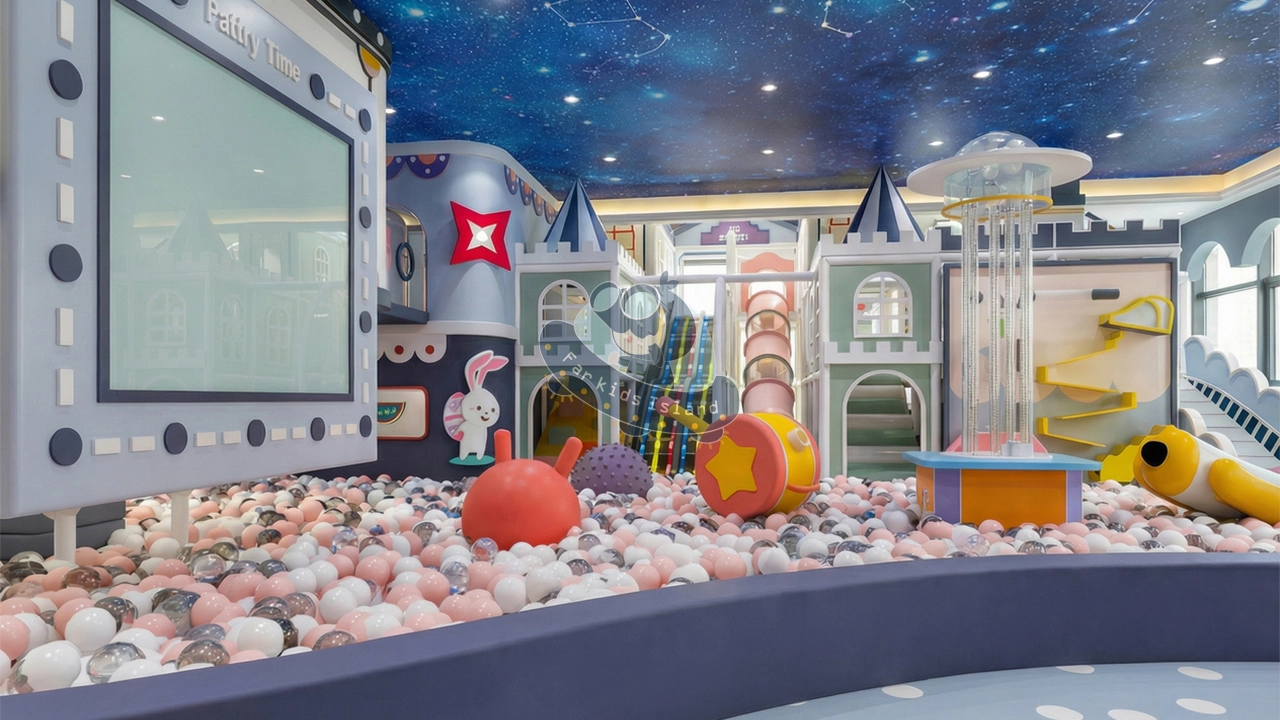
Far Kids Island — Lamb Park Adventure Indoor Playground (UK)
How to Choose a Soft Play Manufacturer for Bulk Orders
Cleaning and Sanitation for Commercial Indoor Playgrounds
Indoor Playground Soft Play Installation: Contractor Checklist
Top Project Picks for Your Next Success



Have Questions or Need More Information?
Ready to Dive Deeper into This Topic?
Explore Detailed Insights and Start Applying Knowledge to Your Project
We’re here to help! Fill out the form below to reach out to our team. Whether you have a question about the article or need assistance with your project, we’re happy to assist you.
Trusted Playground Solution Provider
Professional one-stop indoor playground solutions with a strong focus on design, safety, and eco-friendly materials.
Our Location
No. 106, No. 27, Jiejin 2nd Road, Shiqiao Street, Panyu District, Guangzhou, China.
Say Hello
Social Links
Whatsapp: +8613632109166
Far kids island
Far kids island
Far kids island
TONGSHUO
Guo Wenshu