





Indoor Amusement Park Equipment Manufacturer Comparison: How to Evaluate Suppliers for Commercial Indoor Playgrounds
- How to assess commercial indoor playground suppliers
- Start with a project-specific scope
- Match the supplier’s expertise to the attraction mix
- Compare safety engineering, materials, and quality evidence
- Check standards and risk-assessment practices
- Verify materials, production controls, and inspection records
- Use a consistent supplier comparison matrix
- Evaluate design, installation, and total ownership cost
- Test the layout against real operating conditions
- Compare lifecycle cost, not only purchase price
- Make installation and handover responsibilities explicit
- Turn the comparison into a defensible supplier decision
- Use a practical due-diligence sequence
- How our product focus supports project planning
- Frequently Asked Questions
Supplier comparison summary: Selecting an indoor amusement park equipment manufacturer for a commercial venue requires more than comparing catalog images or quoted prices. Buyers should evaluate risk assessment, applicable safety standards, design and capacity planning, material traceability, quality controls, installation responsibilities, warranty terms, and after-sales support. A documented, project-specific comparison helps investors and operators judge whether a supplier can deliver a safe, maintainable attraction that fits the facility and business model.
How to assess commercial indoor playground suppliers
A commercial play venue is a coordinated system of equipment, circulation, supervision, access control, and operating procedures. A climbing structure may look suitable in a rendering yet fail to meet the project’s actual needs if the supplier has not considered ceiling height, columns, exits, age zoning, admission capacity, or the route for replacing large components. Comparing vendors against the same written brief makes their proposals more meaningful and reduces the risk of scope gaps.
Start with a project-specific scope
Before requesting final quotations, document the venue’s usable area, clear height, structural constraints, target age groups, expected visitor mix, planned attractions, operating hours, and intended throughput. Include local building and fire requirements, accessibility considerations, cleaning routines, and the operator’s staffing model. These inputs help suppliers distinguish usable play area from circulation and service space, and they provide a basis for comparing layouts rather than relying on different assumptions.
Ask each bidder to identify exclusions and owner-provided responsibilities. Common scope differences include freight, import duties, unloading, installation, electrical work, floor preparation, permits, inspections, safety surfacing, signage, and staff training. A low equipment price may not represent the lowest installed cost if important work is omitted or priced later as a change order.
Match the supplier’s expertise to the attraction mix
Indoor playground equipment can include soft-contained play, multi-level climbing frames, slides, toddler zones, obstacle courses, and interactive features. Trampoline park equipment introduces distinct design and operating considerations, including jumping surfaces, padding, transition areas, and activity zoning. Ask for evidence that the proposed team understands the particular attractions in the brief, not simply that it has supplied recreational products in general.
Request relevant project examples and clarify the supplier’s role in each one: concept design, engineering, fabrication, installation, commissioning, or ongoing service. References are most useful when they resemble the buyer’s facility in scale, attraction type, climate, market, and operating model. Where a supplier cannot share client details, it can still explain the project scope and provide non-confidential drawings, process records, or product documentation.
Compare safety engineering, materials, and quality evidence
Safety claims should be tied to the equipment configuration, intended use, installation conditions, and applicable jurisdiction. A certificate for a material or component does not, by itself, prove that a complete play structure is compliant or that it will remain safe when installed and operated. Buyers should ask which standards and regulations apply, what the supplier has assessed, and which independent inspections or tests are included in the proposed scope.
Check standards and risk-assessment practices
For soft-contained play equipment, buyers can ask how the supplier addresses the scope and requirements of ASTM F1918-21, the standard specification for safety performance of soft contained play equipment. For trampoline courts, ASTM F2970-22 provides a relevant safety performance specification. Applicability and the current adopted edition should be confirmed with the project’s qualified professionals and local authorities; citing a standard is not the same as demonstrating conformity.
At the broader design level, ISO 12100:2010 sets out general principles for machinery safety, including risk assessment and risk reduction. It is a useful reference for discussing a supplier’s hazard-identification process, although it does not replace attraction-specific standards or local legal requirements. Ask for a risk register or equivalent design review showing identified hazards, proposed safeguards, residual risks, and any operating instructions needed to manage them.
Verify materials, production controls, and inspection records
Procurement teams should request specifications for structural members, connectors, padding, netting, fabrics, coatings, and other high-wear components. Useful evidence may include material declarations, batch or lot identification, inspection records, test reports, and documented acceptance criteria. Buyers should clarify which records apply to the actual products being quoted, since generic brochures or test documents for a different configuration do not establish the performance of the complete installation.
Discuss how the manufacturer controls dimensional accuracy, weld or connection quality where relevant, padding fit, surface finishing, packaging, and final inspection. Ask how nonconforming parts are identified and corrected, and whether replacement components can be matched to the original specification. For operators, clear component identification and a practical spare-parts process can reduce downtime when frequently handled or high-wear items need attention.
Use a consistent supplier comparison matrix
The table below is a procurement framework rather than a certification checklist. It connects common buyer questions to evidence that can be requested and identifies standards that may be relevant to particular attraction types. The project team should confirm the applicable requirements for its location and final design.
| Evaluation area | Evidence to request | Relevant reference or review |
|---|---|---|
| Soft-contained play safety | Configuration-specific design information, applicable test documentation, inspection scope, and operating instructions | ASTM F1918-21; confirm applicability and adopted edition |
| Trampoline court safety | Layout and activity zoning, component specifications, installation and inspection responsibilities | ASTM F2970-22; confirm applicability and adopted edition |
| Hazard assessment | Hazard identification, risk-reduction measures, residual-risk communication, and maintenance guidance | ISO 12100:2010 as a general risk-assessment reference |
| Manufacturing quality | Material records, production checks, final inspection criteria, and nonconformance process | Review against the contract specification and project quality plan |
| Installation and handover | Defined site requirements, installation scope, commissioning records, manuals, and training plan | Confirm local authority and facility requirements before opening |
Evaluate design, installation, and total ownership cost
Strong proposals connect the attractions to the commercial plan. A family entertainment center focused on repeat visits may value flexible play zones and reliable component replacement, while a destination venue may prioritize a signature feature and capacity management. Ask suppliers to explain the design rationale, the intended user groups, and how circulation and supervision work in practice. A visually impressive concept is not enough if bottlenecks, blind spots, or difficult-to-clean areas undermine daily operations.
Test the layout against real operating conditions
Review scaled plans and three-dimensional views alongside a written equipment schedule. Confirm clearances, access points, entry and exit arrangements, staff sightlines, emergency routes, and the relationship between active attractions and quieter or younger-child areas. Ask the design team to show how the layout uses the actual building dimensions, including columns and restricted zones, and to identify assumptions that still require confirmation by the architect, engineer, or authority having jurisdiction.
Capacity estimates should be treated as design inputs, not guaranteed revenue. Ask how the supplier calculated any stated user capacity and which operational conditions it assumes, such as age mix, supervision, attraction rules, and circulation. The operator should separately determine admission policies, staffing levels, and safe operating procedures with qualified advisers. This separation avoids treating a vendor’s layout estimate as a substitute for an operational risk review.
Compare lifecycle cost, not only purchase price
Request a total-cost breakdown that separates equipment, design, shipping, installation, commissioning, and optional services. Then assess likely maintenance tasks, inspection intervals, consumable or replacement parts, cleaning needs, and the practical availability of technical support. Warranty comparisons should state what is covered, for how long, under which usage conditions, and who pays for labor, freight, or removal when a component must be replaced.
Operational resilience matters because an attraction that is unavailable can affect guest satisfaction and revenue. Ask which components are expected to receive the most wear, whether spare parts are stocked or made to order, and what information is needed to identify a replacement. A supplier that provides clear maintenance manuals, component lists, and escalation contacts gives the facility team a more usable foundation for planning than a warranty statement alone.
Make installation and handover responsibilities explicit
Clarify who checks site readiness, coordinates delivery, manages installation, documents completion, and resolves defects before opening. The agreement should identify required floor and wall conditions, power or other service requirements, access for delivery, and the schedule for owner approvals. If installation is performed by a local contractor, define the supplier’s technical oversight and the records required to verify that the equipment matches the approved design.
Handover should include usable operating and maintenance documentation, inspection guidance, parts identification, and appropriate staff orientation. Buyers should also establish how design changes are approved and documented. A clear change-control process protects the project from mismatches between approved plans, manufactured components, and the as-installed attraction.
Turn the comparison into a defensible supplier decision
A structured scorecard helps the buying team balance compliance, delivery confidence, operational fit, and commercial value. Weight criteria before reviewing bids so that a persuasive presentation or a low initial price does not dominate the decision. For example, a project may assign separate ratings to safety documentation, engineering responsiveness, product durability evidence, design suitability, installation capacity, warranty clarity, and lifecycle support. Record the reason for each score and flag missing evidence rather than assuming it will be supplied later.
Use a practical due-diligence sequence
First, issue the same requirements and drawings to every shortlisted supplier. Next, compare proposals against a common equipment schedule and a list of included and excluded services. Hold technical discussions to resolve differences in assumptions, request evidence for critical claims, and obtain references or project documentation where available. Before contract award, align the final drawings, specifications, delivery milestones, inspection responsibilities, payment terms, and acceptance criteria.
Buyers should also verify the legal entity that will contract, manufacture, export, install, and provide warranty service. These roles may belong to different organizations. Confirming them early helps establish accountability if a shipment is delayed, an installation issue arises, or a replacement part is needed after opening. For international projects, the team should also clarify who coordinates customs documentation, local compliance review, and communication across time zones.
How our product focus supports project planning
Our product focus includes indoor playground equipment and trampoline park equipment for commercial recreation projects. Our team approaches supplier discussions by connecting the proposed attraction mix with the buyer’s facility brief, operational priorities, and required project documentation. This makes it easier to identify which design decisions need confirmation, what information should be included in a quotation, and where the owner may need input from local architects, engineers, or safety professionals.
For buyers comparing suppliers, a productive next step is to share the site dimensions, target audience, preferred attractions, project location, and expected opening schedule. Our team can use that brief to discuss suitable product configurations and the information needed for a more comparable proposal. Product selection should remain tied to project requirements, applicable standards, installation conditions, and the operator’s maintenance plan rather than relying on a generic catalog specification.
Regardless of the chosen vendor, the strongest procurement decision is one supported by clear evidence and accountable scope. A supplier comparison that records assumptions, standards, inspection responsibilities, lifecycle support, and total delivered cost gives investors a more reliable basis for approval and gives operators a clearer path from design to opening.
Contact our team to discuss your project requirements or explore our indoor playground equipment and trampoline park equipment options.
Frequently Asked Questions
What should buyers compare when choosing an indoor playground equipment supplier?
Compare project-specific safety and risk documentation, applicable standards, design suitability, material and manufacturing evidence, installation responsibilities, warranty terms, spare-parts availability, and total delivered cost. Use the same written brief and evaluation criteria for every shortlisted supplier.
Which standards may apply to indoor playground and trampoline park equipment?
ASTM F1918-21 is a relevant reference for soft-contained play equipment, while ASTM F2970-22 addresses trampoline courts. ISO 12100:2010 provides general principles for machinery risk assessment and risk reduction. Buyers should confirm applicability, current editions, and local requirements with qualified project professionals and authorities.
How can buyers verify a supplier’s safety claims?
Ask for configuration-specific design and test documentation, a hazard assessment or risk register, inspection scope, material information, and operating and maintenance instructions. Confirm that documents apply to the quoted equipment and installation; a component certificate or standards reference alone does not establish compliance of the complete venue.
What should a commercial indoor playground equipment quotation include?
A comparable quotation should define the equipment schedule, design and engineering scope, freight, installation, commissioning, exclusions, site requirements, warranty coverage, spare-parts arrangements, documentation, and training. It should also identify responsibilities for permits, inspections, utilities, and other owner-provided work.
How should operators compare the long-term cost of playground equipment?
Look beyond the initial equipment price. Compare installation and delivery costs, routine maintenance, inspection needs, cleaning requirements, replacement-part lead times, warranty limitations, technical support, and likely downtime. Clear manuals and component identification can also help facility teams plan maintenance more effectively.
What information should buyers provide when requesting a supplier proposal?
Provide usable floor area, ceiling height, building constraints, target age groups, desired attractions, expected operating model, project location, schedule, and known building or fire requirements. Include site plans and clarify which services the owner expects the supplier to provide.
Adventure Park Equipment Manufacturer Lead Time and Shipping Risks
Age-Specific Play Zones: Equipment Selection Tips
OEM vs ODM Indoor Playground Equipment for Private-Label Brands
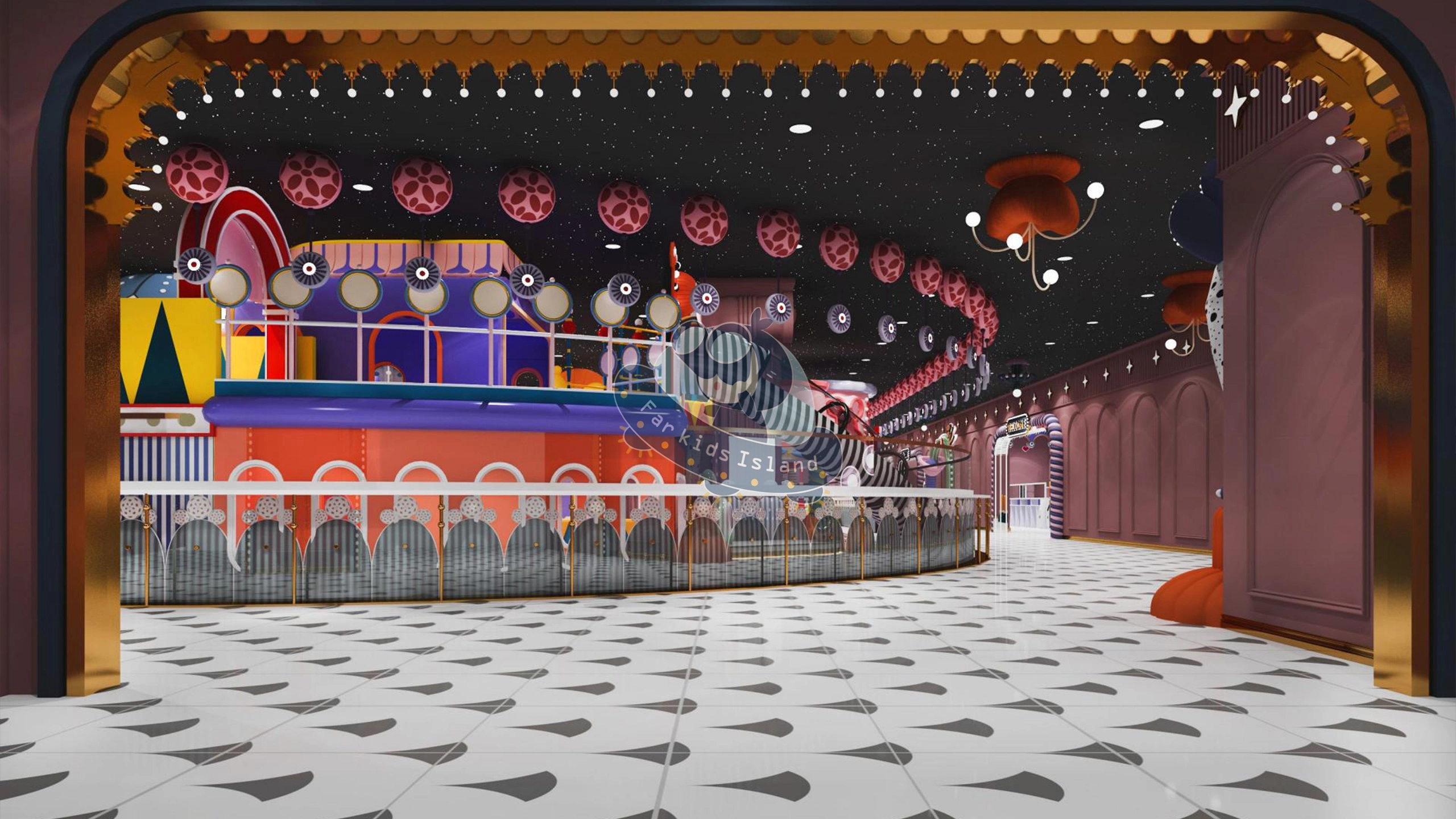
Far Kids Island Little Bubble Fairy Tale Town — Commercial Indoor Playground Equipment for India
Top Project Picks for Your Next Success


Have Questions or Need More Information?
Ready to Dive Deeper into This Topic?
Explore Detailed Insights and Start Applying Knowledge to Your Project
We’re here to help! Fill out the form below to reach out to our team. Whether you have a question about the article or need assistance with your project, we’re happy to assist you.
Trusted Playground Solution Provider
Professional one-stop indoor playground solutions with a strong focus on design, safety, and eco-friendly materials.
Our Location
No. 106, No. 27, Jiejin 2nd Road, Shiqiao Street, Panyu District, Guangzhou, China.
Say Hello
Social Links
Whatsapp: +8613632109166
Far kids island
Far kids island
Far kids island
TONGSHUO
Guo Wenshu