





Indoor Amusement Park Equipment Manufacturer Installation and After-Sales Service: What Buyers Need to Know
- How to Evaluate Installation and Service Before Ordering
- Define responsibilities from design through handover
- Confirm site readiness and installation conditions
- Set measurable acceptance and commissioning criteria
- Safety Standards, Documentation, and Maintenance Planning
- Match standards to the attraction and jurisdiction
- Make maintenance instructions usable on the floor
- Compare service commitments, not just warranty duration
- Procurement Checks That Reduce Lifecycle Risk
- Evaluate the full cost of ownership
- Use contract milestones to protect the opening plan
- How Our Product Focus Fits a Long-Term Project Plan
- Connect equipment selection with operating needs
- Ask for evidence that matches the proposed scope
- Frequently Asked Questions
Choosing an indoor amusement park equipment manufacturer involves more than comparing attraction designs and purchase prices: buyers also need to assess site surveys, installation responsibilities, commissioning, staff training, spare-parts access, and long-term service response. A reliable project plan connects equipment specifications with building conditions, local requirements, operating procedures, and a documented maintenance schedule. Before signing, project owners should establish who is responsible at each stage, what evidence will be supplied at handover, and how technical support will work after the venue opens.
How to Evaluate Installation and Service Before Ordering
Define responsibilities from design through handover
Installation is a coordinated construction and equipment-delivery process, not simply the assembly of play structures. The contract should identify the scope of the equipment supplier, the general contractor, the landlord, and the venue operator. Typical scope questions include who verifies dimensions, prepares foundations or floor penetrations, provides electrical connections, arranges unloading and storage, manages access equipment, and removes packaging. If these tasks are divided across several parties, a responsibility matrix can prevent gaps and disputes.
Request a project schedule that distinguishes design approval, production, shipping, site preparation, installation, inspection, and opening readiness. Each milestone should have a named owner and an approval method. For example, the buyer should know when final shop drawings are due, how changes are documented, and whether installation dates depend on utilities or building work being complete. A clear change-control process is especially important when a layout changes after manufacture, because even a small adjustment can affect clearances, circulation, sightlines, or access for maintenance.
Confirm site readiness and installation conditions
Before production is finalized, the project team should check the site against approved drawings. Relevant details can include ceiling height, structural capacity, floor flatness, access routes, columns, sprinkler coverage, lighting, ventilation, emergency exits, and the location of electrical services. The responsible structural and building professionals should verify building-specific requirements; equipment suppliers should provide the loads and interface information needed for that review. Do not assume that a layout rendering alone confirms that the building can safely accommodate the finished attraction.
Agree in writing on site-readiness criteria and what happens if the site is not ready when the installation crew arrives. Depending on the contract, delays may affect labor costs, storage, travel, or the opening date. Buyers should also confirm whether the installer supplies lifts, tools, personal protective equipment, and barriers, or whether these are provided locally. OSHA’s construction rules address employer duties and safety programs for covered work; the project team should establish which local occupational-safety requirements apply to the installation site. See OSHA construction safety requirements.
Set measurable acceptance and commissioning criteria
Commissioning should confirm that the installed system matches approved drawings and that relevant safety, access, and operational checks have been completed. A handover checklist can cover fasteners, anchoring, protective padding, nets, moving components, electrical interfaces, signage, access points, and any manufacturer-specified clearances. The exact checks depend on the attraction type and applicable rules; buyers should agree on the inspection method and acceptance evidence before installation begins.
Keep a punch list for incomplete work, assign a responsible party to each item, and define whether an issue prevents opening or can be completed under an agreed corrective-action plan. The final handover package should identify the equipment installed, approved drawings, inspection records, manuals, warranty terms, maintenance tasks, and contact routes for service. A signed completion record creates a useful baseline for later inspections, repairs, and insurance discussions.
Safety Standards, Documentation, and Maintenance Planning
Match standards to the attraction and jurisdiction
Applicable requirements vary by country, attraction category, building use, and authority having jurisdiction. A soft-contained play structure, trampoline court, climbing element, and interactive attraction may be governed by different standards or local rules. Buyers should request a written list of the standards and regulations the supplier has used for the proposed equipment, then have the project’s qualified safety and compliance professionals confirm applicability. A standards reference is not a substitute for site-specific approval or inspection.
For example, ASTM International publishes separate documents for different attraction types. ASTM F1918-21 addresses safety performance for soft-contained play equipment, while ASTM F2970-22 covers trampoline courts, including design, manufacture, installation, operation, maintenance, inspection, and major modification. These scopes are not interchangeable, and a buyer should not assume that citing one document establishes compliance with every attraction in a venue.
Risk assessment is another important part of a disciplined design and operating process. ISO 12100 describes general principles for machinery safety, including risk assessment and risk reduction. It can inform a broader safety review, but it does not by itself certify an amusement venue or replace attraction-specific requirements. For playground-related risk considerations, the U.S. Consumer Product Safety Commission’s Public Playground Safety Handbook is a reference for public playgrounds; buyers should check its stated scope and avoid treating it as a complete commercial indoor-venue code.
Make maintenance instructions usable on the floor
A manual is valuable only if operators can translate it into daily practice. Ask for an inspection schedule that separates pre-opening checks, routine operational checks, periodic detailed inspections, and maintenance requiring a qualified technician. Each task should specify what to look for, how to record findings, and when equipment must be taken out of service. Examples may include checking visible wear, loose connections, damaged padding, net integrity, abnormal movement, and cleanliness, according to the supplier’s instructions and the applicable standard.
Operators should receive training on incident escalation, defect reporting, lockout or isolation procedures where relevant, and the limits of in-house repairs. The documentation should make clear which work can be completed by trained venue staff and which requires a technician or other competent person. Keep records of inspections, repairs, replacement parts, incidents, and modifications. Consistent records help managers identify recurring faults, demonstrate that procedures are being followed, and plan maintenance during lower-demand periods.
Compare service commitments, not just warranty duration
A warranty period alone does not explain how quickly a venue can recover from a failure. Ask whether the warranty covers parts, labor, travel, freight, or only specified manufacturing defects, and whether exclusions apply to misuse, normal wear, unauthorized repairs, or environmental conditions. Confirm when coverage begins, how claims are submitted, what evidence is required, and who decides whether a component is covered.
For ongoing service, clarify response channels, business hours, language support, remote troubleshooting options, technician availability, and the process for urgent safety-related issues. A supplier should explain how it identifies replacement components and how long commonly used parts are expected to remain available, without promising availability beyond what it can substantiate. Buyers can compare proposals using the following checklist; the service terms should be confirmed in the contract rather than inferred from a sales presentation.
| Project item | Basic commitment to verify | Stronger buyer protection |
|---|---|---|
| Installation scope | General statement that installation is included | Written task list, exclusions, site prerequisites, and named responsibilities |
| Commissioning | Verbal confirmation that equipment is ready | Documented checks, punch list, acceptance criteria, and signed handover records |
| Warranty | Warranty duration only | Coverage, exclusions, claim steps, start date, and allocation of labor and freight costs |
| Technical support | General promise of after-sales assistance | Defined contact channels, escalation path, response expectations, and troubleshooting process |
| Spare parts | Parts available on request | Parts identification method, ordering process, lead-time guidance, and recommended stock list |
| Training and manuals | Basic product documentation | Operator training, inspection schedules, repair limits, and maintenance records guidance |
Procurement Checks That Reduce Lifecycle Risk
Evaluate the full cost of ownership
The lowest equipment quotation may not represent the lowest project cost. Buyers should compare the delivered and installed scope, freight, duties, installation labor, building modifications, inspection costs, training, consumables, maintenance, and anticipated replacement parts. Ask suppliers to identify assumptions and exclusions in comparable line items. Where service pricing is not fixed, request the rates or calculation method for technician travel, labor, and urgent support so that future costs are not a surprise.
Commercial due diligence should also examine the supplier’s ability to provide project documentation and maintain continuity through the delivery cycle. Ask for examples of relevant product documentation, a proposed project schedule, a sample maintenance manual, and references for comparable installations where available. Verify that claims about certifications, testing, or compliance apply to the exact equipment model and intended use. Buyers should distinguish between a company-level credential, a material test, a product test, and an independent inspection; they answer different questions.
Use contract milestones to protect the opening plan
Payment milestones should align with verifiable deliverables rather than dates alone. A project may tie approvals to drawing sign-off, manufacturing progress, pre-shipment documentation, delivery, installation completion, and acceptance, subject to commercial negotiation. The agreement should also set out how defects are reported, how corrective work is tracked, and how unresolved issues affect final acceptance. If the venue has a fixed launch date, include realistic contingency time for shipping, local approvals, commissioning, and staff training.
When comparing offers, look for consistency between the quotation, drawings, specifications, installation plan, warranty, and service proposal. Differences can hide scope gaps: one offer may include assembly but exclude anchoring, while another may include training but exclude travel. A side-by-side compliance and scope matrix helps procurement, operations, facilities, and finance teams review the same assumptions. It also gives the project owner a clear basis for resolving questions before they become costly site changes.
How Our Product Focus Fits a Long-Term Project Plan
Connect equipment selection with operating needs
Our product focus includes indoor playground equipment and trampoline park equipment. These categories serve different activity patterns and operating models, so buyers should select components according to the intended age groups, capacity, supervision approach, available footprint, and planned mix of attractions. A family entertainment center may need play zones that support clear sightlines and efficient circulation, while a trampoline venue may require carefully organized activity areas, controlled access, and operating procedures suited to its equipment.
Our role in a procurement discussion is to help buyers connect the selected equipment scope with the information needed for planning: layout requirements, interfaces with the building, installation responsibilities, handover documentation, and ongoing care. Because project conditions and local regulations differ, specifications and service commitments should be confirmed for the actual site and contract. Buyers can use the questions in this guide to assess whether a proposed solution is practical to install, inspect, operate, and maintain, rather than choosing on visual design alone.
Ask for evidence that matches the proposed scope
To assess any supplier, request project-specific drawings, product specifications, applicable standards references, installation assumptions, maintenance instructions, warranty language, and a clear service contact process. Ask which documents will be delivered before shipment and which will be provided at handover. If a claim is important to the investment decision, such as a certification, test result, or response commitment, request the supporting record and verify that it covers the equipment and service being purchased.
Our indoor playground equipment and trampoline park equipment should be evaluated against the venue’s commercial objectives as well as its technical requirements. The most useful proposal is one that makes scope, interfaces, operating needs, and after-sales arrangements understandable to the buyer’s full project team. A transparent review before order placement can reduce redesign, clarify responsibilities, and help operators prepare maintenance processes before opening day.
Contact our team to discuss indoor playground equipment and trampoline park equipment for your project and request details on product scope, installation planning, and after-sales support.
Frequently Asked Questions
What should an indoor amusement equipment installation contract include?
It should define responsibilities for site verification, building interfaces, utilities, unloading, installation, commissioning, training, documentation, exclusions, and change control. Include site-readiness criteria, acceptance requirements, schedule milestones, and a process for tracking incomplete work.
What documents should buyers receive at equipment handover?
The handover package should identify the installed equipment and include approved drawings, inspection and commissioning records, operating and maintenance manuals, warranty terms, maintenance schedules, and service contact details. The exact documents depend on the equipment and applicable local requirements.
How can buyers compare after-sales service beyond warranty length?
Compare what the warranty covers and excludes, how claims are submitted, and whether labor, travel, freight, and parts are included. Also check support channels, escalation procedures, response expectations, troubleshooting options, technician availability, and the process for ordering replacement parts.
Which standards apply to indoor playgrounds and trampoline parks?
Requirements depend on the attraction, jurisdiction, and authority having jurisdiction. ASTM F1918-21 addresses soft-contained play equipment, while ASTM F2970-22 covers trampoline courts. Buyers should confirm applicability with qualified project professionals and check local rules rather than assuming one standard covers every attraction.
What should an operator inspection and maintenance plan cover?
It should distinguish pre-opening checks, routine operational inspections, periodic detailed inspections, and work requiring a qualified technician. Tasks should explain what to inspect, how to record findings, when to remove equipment from service, and how defects and repairs are escalated.
How can buyers reduce installation delays?
Confirm site dimensions, structural and utility interfaces, access routes, and site-readiness criteria before production and installation. Assign owners to each prerequisite, agree on schedule milestones and change control, and allow contingency time for shipping, approvals, commissioning, and staff training.
Commercial Indoor Playground Equipment Manufacturer for Distributors
How Much Does Family Entertainment Center Equipment Cost? A B2B Pricing and Budget Guide
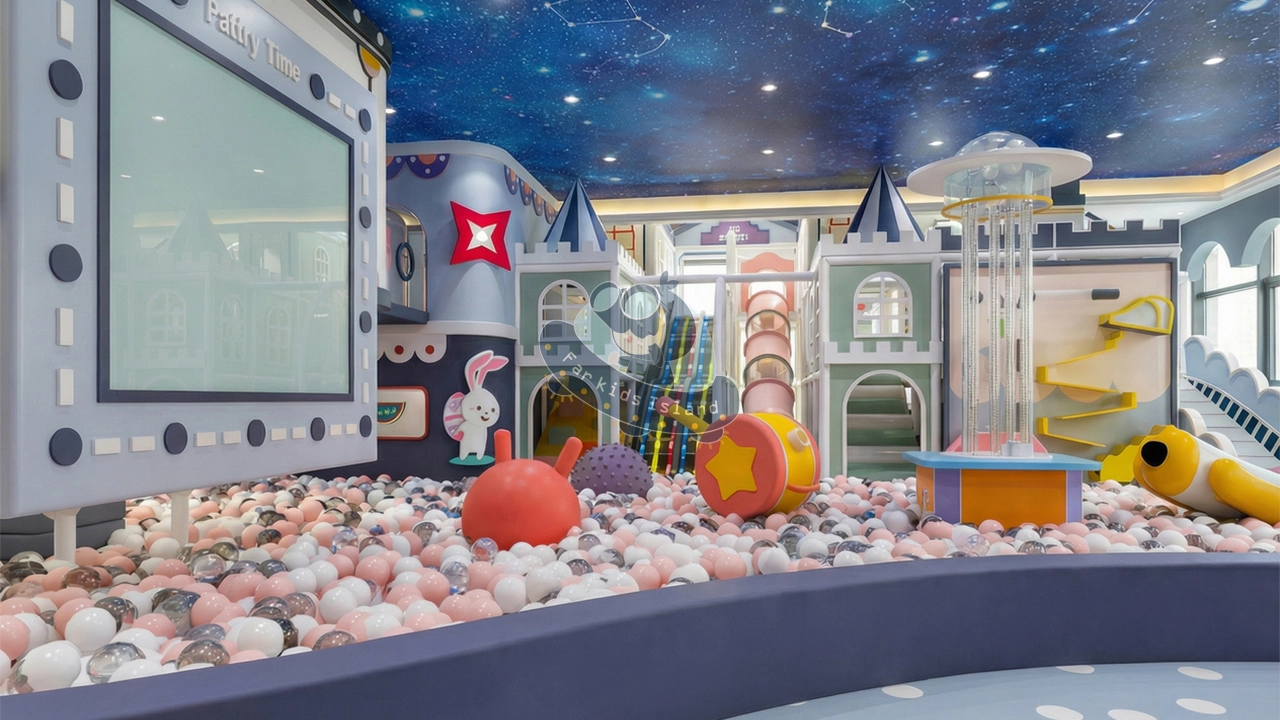
Far Kids Island — Lamb Park Adventure Indoor Playground (UK)
Custom Indoor Playground Trends: Best-Selling Features for Buyers
Top Project Picks for Your Next Success



Have Questions or Need More Information?
Ready to Dive Deeper into This Topic?
Explore Detailed Insights and Start Applying Knowledge to Your Project
We’re here to help! Fill out the form below to reach out to our team. Whether you have a question about the article or need assistance with your project, we’re happy to assist you.
Trusted Playground Solution Provider
Professional one-stop indoor playground solutions with a strong focus on design, safety, and eco-friendly materials.
Our Location
No. 106, No. 27, Jiejin 2nd Road, Shiqiao Street, Panyu District, Guangzhou, China.
Say Hello
Social Links
Whatsapp: +8613632109166
Far kids island
Far kids island
Far kids island
TONGSHUO
Guo Wenshu