





How Much Does Family Entertainment Center Equipment Cost? A B2B Pricing and Budget Guide
- Understanding the Investment Behind an Indoor Family Fun Venue
- Why attraction mix changes the quotation
- Typical planning ranges by venue scale
- The cost categories buyers frequently overlook
- How to Build a Defensible Equipment and Opening Budget
- Start with a space and capacity brief
- Separate equipment price from total installed cost
- Evaluate payback through operating assumptions
- Procurement, Compliance, and Lifecycle Decisions
- Questions to ask manufacturers and distributors
- Assess quality, maintenance, and replacement reserves
- Use staged procurement to reduce financial exposure
- Why Far Kids Island Supports More Predictable FEC Budgets
- Integrated design and manufacturing capability
- Commercial attractions designed for safety and durability
- Turnkey delivery and international project experience
- Frequently Asked Questions
Commercial family entertainment center equipment can cost approximately $150,000 to more than $2 million, depending on the venue’s floor area, attraction mix, design complexity, local construction conditions, and level of customization. A compact soft-play center may require $150,000–$400,000 for attractions and related project expenses, while a medium multi-attraction venue can reach $400,000–$1 million; destination-scale facilities with trampoline zones, climbing systems, themed interiors, party rooms, food service, and advanced automation may exceed $2 million. These figures are planning ranges rather than universal quotations. A reliable budget must separate equipment, freight, installation, building works, permits, insurance, technology, staffing, marketing, and working capital. Buyers should also assess safety through recognized frameworks such as U.S. Consumer Product Safety Commission guidance, relevant ASTM standards, and the principles of risk management described by ISO 31000.
Understanding the Investment Behind an Indoor Family Fun Venue
Why attraction mix changes the quotation
The phrase indoor playground equipment covers many different commercial systems, and each has a different cost structure. A basic soft-play structure uses padded platforms, slides, tunnels, ball pools, climbing elements, and protective flooring. A more sophisticated installation may include a toddler area, ninja course, rope challenge, interactive projection, sports court, role-play village, party rooms, and café integration. Each additional attraction affects not only the purchase price but also ceiling height, structural loading, electrical demand, supervision, cleaning, and maintenance.
Trampoline park equipment typically carries higher engineering and installation requirements than a standard play frame. Trampoline beds, angled walls, foam pits, airbag landings, dodgeball courts, and elevated platforms require coordinated layout planning and clearly defined user flows. A venue that combines soft play, trampolines, climbing, and digital games can generate broader customer appeal, but it also needs more detailed operating procedures and a larger replacement reserve.
Typical planning ranges by venue scale
| Venue model | Typical attraction scope | Indicative total project range | Primary budget risks |
|---|---|---|---|
| Compact play café | Soft play, toddler zone, seating, small party room | $150,000–$400,000 | Building adaptation, kitchen, local permits |
| Medium FEC | Multi-level play, trampolines, parties, arcade or interactive games | $400,000–$1,000,000 | Fire systems, electrical upgrades, installation complexity |
| Large destination venue | Several attractions, food and beverage, retail, event rooms, theming | $1,000,000–$2,000,000+ | Tenant improvement, technology, staffing, working capital |
| Outdoor and indoor hybrid | Indoor attractions plus outdoor play or adventure elements | Highly site-specific | Weather protection, drainage, foundations, logistics |
These ranges should not be treated as market guarantees because country, currency, labor rates, shipping terms, building condition, and supplier scope differ substantially. The most useful early document is a concept-level bill of quantities showing each attraction, dimensions, materials, safety surfacing, accessories, packaging, installation, and exclusions. It allows investors to compare quotations on scope rather than on a headline equipment figure.
The cost categories buyers frequently overlook
Equipment often represents only part of the opening investment. Other categories can include architectural and engineering services, demolition, flooring, lighting, HVAC, power distribution, fire detection, sprinklers, access control, CCTV, lockers, reception furniture, ticketing software, signage, toilets, staff facilities, insurance, licenses, deposits, launch advertising, and initial payroll. Freight may be quoted separately from customs clearance, destination handling, taxes, and local delivery.
Working capital deserves a separate line. A new venue may need several months of rent, wages, utilities, consumables, repairs, and marketing before attendance reaches the business plan. Underfunding this phase can damage an otherwise well-designed attraction. Buyers should therefore prepare both a capital expenditure budget and an operating cash-flow forecast.
How to Build a Defensible Equipment and Opening Budget
Start with a space and capacity brief
Before requesting prices, define the gross leased area, usable attraction area, ceiling height, columns, exits, loading access, floor slab condition, power availability, and intended age groups. The design should distinguish active play zones from circulation, queuing, reception, party rooms, restrooms, food service, storage, staff areas, and emergency egress. A supplier cannot provide a dependable layout or quotation from floor area alone.
Capacity planning should consider both peak occupancy and supervision. More usable play capacity can improve revenue potential, but excessive density may reduce comfort and create operational risk. The layout should provide sightlines for attendants, age separation where appropriate, controlled entry and exit, and unobstructed access for cleaning and inspection. The ASTM F2970 standard for trampoline courts is one example of why attraction-specific requirements matter when evaluating a design.
Separate equipment price from total installed cost
A professional request for proposal should require at least four pricing layers: manufactured equipment, export packing and freight, installation and commissioning, and optional services. It should also identify the commercial basis for delivery, payment milestones, lead time, warranty, spare parts, training, and responsibility for site preparation. Comparing one supplier’s factory price with another supplier’s installed price produces an unreliable conclusion.
- Manufactured equipment: structures, padding, nets, platforms, slides, trampolines, flooring, hardware, graphics, and accessories.
- Project services: 2D and 3D design, engineering review, shop drawings, packing lists, installation supervision, testing, and handover documents.
- Site works: foundations, slab repairs, partitions, ceilings, electrical systems, ventilation, lighting, fire protection, and accessibility modifications.
- Commercial launch costs: permits, insurance, point-of-sale systems, staff recruitment, training, opening inventory, advertising, and contingency.
A contingency of roughly 10%–15% is commonly used for defined construction and equipment budgets, although complex renovations, overseas logistics, and uncertain building conditions may justify a larger allowance. The contingency should be controlled through documented change orders rather than used to conceal missing scope.
Evaluate payback through operating assumptions
Return on investment depends on attendance, average revenue per guest, party bookings, memberships, food and beverage sales, utilization by daypart, labor cost, rent, maintenance, and marketing efficiency. A simple model can estimate monthly revenue by multiplying paid visits by average admission revenue, then adding secondary income from parties, memberships, snacks, merchandise, and High Quality attractions.
Buyers should test conservative, base, and high-demand cases. The conservative case may use lower weekday attendance, slower membership growth, and higher repair costs. The model should also include seasonal variation, school holidays, promotional discounts, no-show rates, and capacity limits. A lower equipment price is not automatically better if it reduces durability, attraction uptime, visual appeal, or the ability to refresh the venue later.
Procurement, Compliance, and Lifecycle Decisions
Questions to ask manufacturers and distributors
Supplier due diligence should examine legal identity, manufacturing location, design ownership, quality-control procedures, export experience, installation resources, and references for comparable projects. Buyers should request material specifications, load assumptions, padding details, anchoring methods, cleaning guidance, inspection schedules, and replacement-part availability. Certificates should be checked against the actual supplied design and not accepted as generic marketing claims.
Safety documentation should match the attraction type and destination market. The CPSC-published challenge course safety information illustrates the importance of using appropriate technical guidance for specialized attractions. Local authorities may also impose requirements for fire egress, accessibility, structural engineering, electrical work, and public liability. Compliance responsibility should be assigned in the contract before production begins.
Assess quality, maintenance, and replacement reserves
Commercial play environments experience constant abrasion, impact, contamination, and repeated cleaning. Buyers should evaluate foam density, PVC or equivalent coating performance, stitching, fasteners, netting, steel treatment, weld quality, flooring resilience, and the accessibility of wear components. A maintenance schedule should cover daily visual checks, documented weekly inspections, periodic hardware tightening, padding replacement, net inspection, trampoline-bed assessment, and professional annual review where required.
Lifecycle cost includes labor for cleaning, consumables, downtime, spare parts, attraction refreshes, software subscriptions, energy consumption, and eventual refurbishment. A modular design can reduce future disruption because damaged panels, graphics, padding, or activity elements may be replaced without dismantling the entire structure. Buyers should request a recommended spare-parts package and price list before signing the purchase order.
Use staged procurement to reduce financial exposure
Many projects benefit from a staged process: feasibility study, measured site survey, concept design, preliminary budget, detailed engineering, final quotation, production approval, factory quality inspection, shipment, installation, commissioning, and operational training. This sequence gives stakeholders several decision points and helps prevent expensive redesign after manufacturing begins.
Payment milestones should correspond to verifiable deliverables, such as approved drawings, completed production, inspection, shipment, installation, and acceptance. Contracts should define the treatment of delays, missing components, damage in transit, defects, warranty claims, and changes requested by the buyer. A clear acceptance checklist can protect both parties while ensuring that the venue opens with a documented handover.
Why Far Kids Island Supports More Predictable FEC Budgets
Integrated design and manufacturing capability
Guangdong Tongshuo Industrial Co., Ltd., operating under the globally trusted brand Far Kids Island, is a premier manufacturer of commercial indoor and outdoor playgrounds in Guangzhou, China. Established in 2012 with manufacturing roots dating back to 1993, our organization brings more than 30 years of industry expertise to project planning and production. Our 20,000-square-meter manufacturing facility is supported by more than 200 professionals and over 20 senior design experts.
We integrate research and development, custom 3D design, in-house production, and global sales rather than treating equipment as an isolated purchase. This structure helps project owners coordinate spatial planning, attraction selection, theming, manufacturing, packing, installation, and training through one accountable solution team. Early 3D visualization also enables buyers to review circulation, sightlines, branding, and capacity before production costs are committed.
Commercial attractions designed for safety and durability
Our philosophy is Designed for Children, Built for Safety. Far Kids Island develops non-toxic, commercial-grade play environments for schools, FECs, shopping malls, and resorts. Our product portfolio includes customized indoor playground equipment, multi-level soft-play systems, toddler structures, climbing and adventure elements, and trampoline park equipment for venues seeking a broader attraction mix.
Material selection, fabrication, padding, protective surfaces, and installation details are considered as part of the operating environment. ASTM and COC certifications support documentation for applicable products, while project-specific requirements remain subject to the destination country and local authority. This distinction is important: certification documents should complement, not replace, site assessment, professional installation, operator training, and ongoing inspection.
Turnkey delivery and international project experience
Far Kids Island provides a turnkey experience covering space planning, theme development, custom design, manufacturing, professional installation, and operational training. The company has exported playground solutions to clients in more than 30 countries, giving international buyers a practical basis for discussing packaging, shipping coordination, installation sequencing, and handover expectations.
For investors comparing quotations, the key advantage is scope transparency. Our team can help identify the difference between factory equipment cost and the complete delivered solution, including design services, accessories, spare parts, installation requirements, and training. This approach supports more accurate capital planning and reduces the risk of receiving a low initial quote that later expands through exclusions and change orders. Project owners can review product and capability information at Far Kids Island or request a project discussion using sulla.tongshuo@gmail.com.
For a site-specific budget, buyers should prepare the venue location, floor plan, ceiling height, target age range, attraction preferences, estimated capacity, budget ceiling, and desired opening date. Those inputs allow a manufacturer to develop a more useful concept layout and commercial quotation than a generic price list.
Contact Far Kids Island at sulla.tongshuo@gmail.com or visit https://www.farkidsisland.com to discuss a tailored indoor playground or trampoline park project budget.
Frequently Asked Questions
How much does it cost to open a family entertainment center?
A compact play café may require approximately $150,000–$400,000, a medium multi-attraction venue may reach $400,000–$1,000,000, and a large destination facility may exceed $2 million. The final investment depends on attractions, construction, shipping, permits, technology, staffing, and working capital.
What is included in the price of indoor playground equipment?
The quotation may include structures, slides, padding, nets, flooring, accessories, graphics, and hardware. Design, freight, installation, site preparation, taxes, spare parts, training, and commissioning may be separate, so buyers should request a detailed scope and exclusions list.
How much does trampoline park equipment cost?
Trampoline park pricing is highly site-specific because it depends on court size, trampoline systems, foam pits or airbags, platforms, padding, safety nets, engineering, installation, and local building conditions. It should be priced as part of a complete attraction layout rather than as a standalone number.
What certifications should an FEC equipment buyer request?
Buyers should request material and product documentation applicable to the attraction and destination market, including relevant ASTM information, certificates of conformity where applicable, engineering documents, installation instructions, inspection procedures, and warranty terms. Local authorities may require additional structural, fire, electrical, and accessibility approvals.
What other costs are commonly missed in an FEC budget?
Commonly overlooked items include freight and destination handling, customs and taxes, flooring, HVAC, lighting, fire systems, electrical upgrades, permits, insurance, ticketing software, furniture, marketing, staff training, spare parts, maintenance, rent deposits, and several months of working capital.
How can buyers compare quotations from different manufacturers?
Buyers should compare equivalent layouts and specifications, then separate equipment, design, packing, freight, installation, site works, training, warranty, spare parts, and taxes. A bill of quantities, delivery terms, payment milestones, inspection process, and acceptance checklist make supplier comparisons more reliable.
How to Compare Indoor Playground Equipment Cost from Different Manufacturers and Suppliers
Safety Surfacing Options for Custom Indoor Play Areas
indoor soft play equipment Customization: Layout, Logo and Packaging
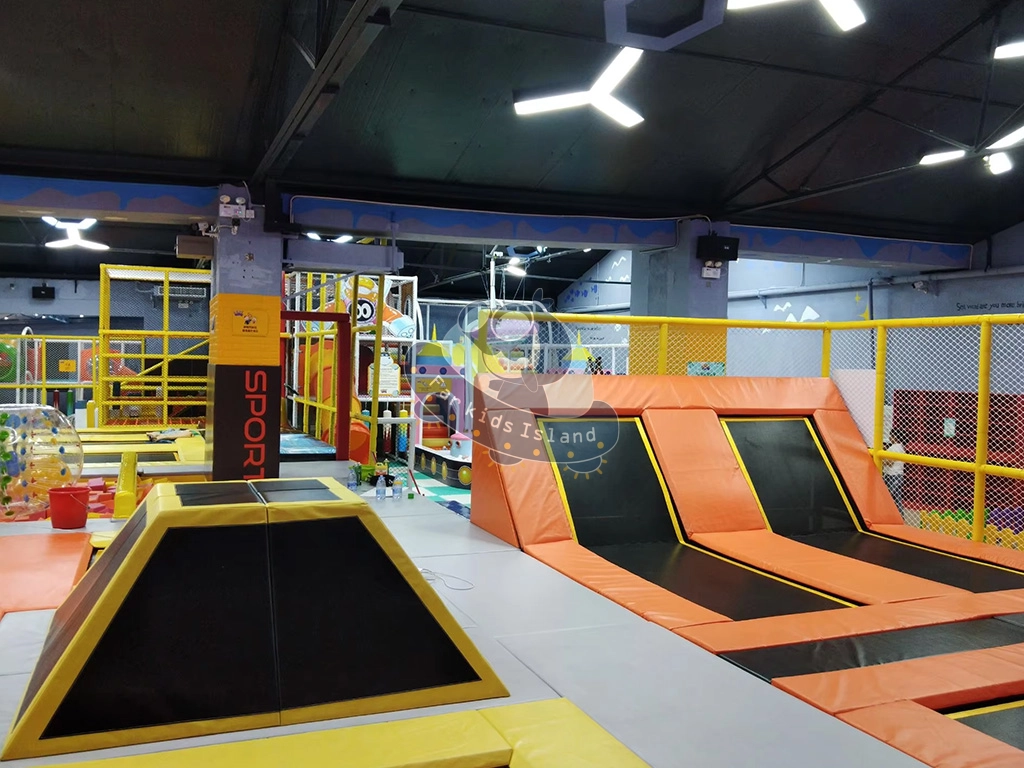
5000 sqm Trampoline Adventure Park: Layout, Attractions & Project Planning
Top Project Picks for Your Next Success


Have Questions or Need More Information?
Ready to Dive Deeper into This Topic?
Explore Detailed Insights and Start Applying Knowledge to Your Project
We’re here to help! Fill out the form below to reach out to our team. Whether you have a question about the article or need assistance with your project, we’re happy to assist you.
Trusted Playground Solution Provider
Professional one-stop indoor playground solutions with a strong focus on design, safety, and eco-friendly materials.
Our Location
No. 106, No. 27, Jiejin 2nd Road, Shiqiao Street, Panyu District, Guangzhou, China.
Say Hello
Social Links
Whatsapp: +8613632109166
Far kids island
Far kids island
Far kids island
TONGSHUO
Guo Wenshu