





How to Evaluate Indoor Playground Equipment Quality When Comparing Indoor Playground Equipment Cost
- A Practical Framework for Comparing Commercial Indoor Play Systems
- Separate the purchase price from the complete project investment
- Assess design suitability before comparing materials
- Use standards as a baseline, not as a substitute for due diligence
- Quality Indicators That Predict Safety and Service Life
- Inspect the structural frame and connection system
- Examine padding, netting, flooring, and wear surfaces
- Verify manufacturing controls and quality consistency
- How to Calculate Value Beyond the Initial Quotation
- Build a total-cost-of-ownership model
- Compare suppliers using a weighted scorecard
- Identify warning signs before signing a purchase order
- Selecting a Manufacturing Partner for Long-Term Operational Value
- Evaluate technical communication and project management
- Consider integrated attraction capability
- Demand evidence that supports the promised value
- Frequently Asked Questions
Comparing indoor playground equipment cost requires more than reviewing a supplier’s headline quotation. Project owners should assess structural engineering, material safety, fall protection, fire performance, accessibility, maintenance requirements, installation scope, warranty coverage, and expected operating life alongside the initial purchase price. A low quotation may exclude essential components or transfer future expenses to the operator, while a higher-quality system can reduce downtime, repairs, replacement frequency, and safety-related business risk. This guide explains how investors, distributors, family entertainment center operators, and commercial developers can evaluate product quality objectively and build a procurement decision around total cost of ownership.
A Practical Framework for Comparing Commercial Indoor Play Systems
Separate the purchase price from the complete project investment
A supplier quotation often covers only the manufactured play structure. The full project budget may also include concept design, engineering drawings, site measurement, freight, customs clearance, unloading, installation, flooring, electrical work, lighting, signage, inspection, staff training, and post-installation adjustments. Comparing two proposals is therefore meaningful only when both suppliers provide a comparable scope of supply.
Buyers should request a line-item quotation that identifies the quantity, dimensions, materials, accessories, labor, packaging, delivery terms, taxes, and exclusions. A proposal that appears inexpensive may omit protective flooring, access gates, padding, netting, fire-retardant treatment, or installation supervision. These omissions can create a substantial budget variance after the purchase order has been issued.
A useful evaluation method is to calculate the delivered and operational cost rather than the factory price. The calculation should include acquisition, transport, installation, planned maintenance, consumable replacement, cleaning labor, downtime, and eventual refurbishment. This approach creates a more accurate comparison between a basic soft-play configuration, a multi-level adventure structure, and a combined play-and-trampoline attraction.
Assess design suitability before comparing materials
Quality begins with whether the equipment is appropriate for the venue. Ceiling height, floor loading, circulation routes, emergency exits, columns, sprinklers, HVAC systems, sightlines, age zoning, and guest capacity all influence the correct design. A system that is technically well manufactured can still be unsuitable if it blocks evacuation routes, creates blind areas for supervisors, or exceeds the building’s structural limitations.
The layout should separate toddlers, young children, older children, and high-energy attractions where practical. Entry and exit points need clear supervision, while slides, climbing features, bridges, trampolines, and ball-play zones should be arranged to reduce cross-traffic and collision exposure. A competent supplier should provide dimensioned drawings, traffic-flow logic, access for cleaning, and a clear explanation of how the design complies with the project’s local building and safety requirements.
Use standards as a baseline, not as a substitute for due diligence
Buyers should ask which standards and test methods apply to the proposed equipment in the destination market. The ASTM F1487 standard addresses public-use playground equipment and related safety considerations in the United States, while the ISO 17842 series covers safety requirements for amusement rides and amusement devices. Indoor play centers may also be subject to local building codes, fire regulations, electrical rules, accessibility requirements, and insurance conditions.
Certification documents should be matched to the actual product, configuration, manufacturer, and production date. A generic certificate for a different model does not prove that the supplied installation has been evaluated. Buyers should also confirm whether testing was performed by an independent laboratory and whether the report identifies impact areas, openings, entrapment risks, materials, flame performance, and structural loads relevant to the planned installation.
Quality Indicators That Predict Safety and Service Life
Inspect the structural frame and connection system
The primary frame should be evaluated for tube dimensions, steel grade, weld quality, corrosion protection, connection design, and load-bearing logic. Powder coating can improve surface durability, but coating quality depends on preparation, application, curing, and environmental conditions. In humid, coastal, or high-cleaning environments, corrosion protection deserves special attention.
Ask for engineering calculations or load specifications where appropriate, especially for elevated platforms, suspended components, trampolines, climbing walls, and large integrated structures. Welds should be continuous and consistent in load-critical areas, with no visible cracks, sharp projections, excessive porosity, or unfinished edges. Bolts, brackets, clamps, and anchors should be selected for the expected loads and installed according to documented procedures.
| Evaluation area | Evidence to request | Commercial impact |
|---|---|---|
| Structural integrity | Engineering drawings, load information, weld and connection specifications | Reduces failure risk and supports approval, insurance, and long service life |
| Impact protection | Padding specifications, foam density information, cover materials, impact-zone details | Improves user protection and reduces premature replacement |
| Material safety | Material declarations and relevant laboratory test reports | Supports regulatory review and customer confidence |
| Fire performance | Applicable flame-retardancy documentation for fabrics, foam, netting, and plastics | Helps address fire-code and insurer requirements |
| Installation quality | Installation method, anchor plan, completion checklist, staff handover | Reduces commissioning delays and operational defects |
| After-sales support | Warranty terms, spare-parts list, response process, maintenance guidance | Limits downtime and improves lifecycle economics |
Examine padding, netting, flooring, and wear surfaces
Soft components often determine the day-to-day user experience and maintenance burden. Buyers should evaluate foam density, recovery performance, seam strength, stitching, zipper protection, cover thickness, UV exposure, cleaning compatibility, and resistance to abrasion. Padding should remain securely attached and should not expose hard frame members during normal use.
Netting requires close inspection because weak mesh, poor attachment, or oversized openings can create safety concerns. Flooring should provide suitable impact attenuation for the intended activity and should be compatible with cleaning chemicals, moisture levels, and anticipated foot traffic. Trampoline beds, edge pads, springs, frames, and protective skirts require a separate inspection because these components experience repetitive dynamic loading.
Verify manufacturing controls and quality consistency
A professional factory should be able to explain how it controls incoming materials, cutting, welding, coating, sewing, assembly, inspection, packaging, and shipment release. Quality is not demonstrated by photographs alone. Buyers should request production samples, inspection records, component drawings, packaging images, and, where feasible, a factory audit or third-party pre-shipment inspection.
Batch identification and spare-part traceability are valuable operational controls. If a replacement pad, net panel, spring, fastener, or molded component is needed several years after opening, the operator should be able to identify the correct specification quickly. Suppliers that maintain bills of materials and revision-controlled drawings are generally better positioned to support long-term maintenance.
How to Calculate Value Beyond the Initial Quotation
Build a total-cost-of-ownership model
A sound financial comparison should estimate the cost of ownership over a defined period, commonly five to ten years depending on the project model. The analysis can include purchase price, shipping, installation, inspection, routine cleaning, scheduled part replacement, repairs, staff labor, attraction downtime, refurbishment, and disposal. Revenue assumptions should remain separate from quality claims, but equipment availability and customer experience can influence repeat visitation and booking performance.
For example, a lower-priced structure that requires frequent pad replacement and closes sections for repairs may produce a higher operating burden than a more robust system with a greater initial investment. Buyers should calculate expected annual maintenance cost, probable replacement intervals, and the financial effect of closing a popular attraction during peak periods. Warranty coverage should be assessed by component and should clearly state whether labor, freight, consumables, misuse, and normal wear are included.
Compare suppliers using a weighted scorecard
Price should be one category in a broader procurement scorecard. A practical weighting may assign importance to safety documentation, design quality, material specifications, manufacturing controls, installation capability, warranty, spare-parts availability, delivery reliability, and commercial terms. The appropriate weighting depends on the venue, but safety and regulatory suitability should not be traded away for a small purchase-price difference.
- Safety and compliance evidence: confirm applicable standards, testing, documentation, and local approval requirements.
- Engineering and design: assess site adaptation, capacity planning, supervision, circulation, and emergency access.
- Manufacturing quality: inspect materials, welds, padding, netting, coatings, stitching, and assembly accuracy.
- Project delivery: compare lead time, packaging, shipping responsibilities, installation, commissioning, and training.
- Lifecycle support: review warranty, spare parts, maintenance instructions, response time, and refurbishment options.
- Commercial transparency: identify exclusions, payment terms, change-order rules, and ownership of design revisions.
Identify warning signs before signing a purchase order
Procurement risk increases when a supplier refuses to provide a detailed bill of materials, cannot identify the applicable standards, uses certificates unrelated to the quoted model, offers an unusually short lead time without explaining capacity, or provides only rendered images instead of technical drawings. Other warning signs include unclear warranty exclusions, no spare-parts plan, inconsistent dimensions across documents, and pressure to approve a design before site information is complete.
Buyers should also be cautious about comparing a complete turnkey proposal with a manufacturing-only quotation. The two offers may have different responsibilities for engineering, installation, inspection, and remedial work. A transparent supplier will identify assumptions and confirm which party is responsible for each stage from design approval through opening day.
Selecting a Manufacturing Partner for Long-Term Operational Value
Evaluate technical communication and project management
In the latter stage of procurement, the supplier relationship becomes as important as the product specification. Our team’s recommended approach is to select a partner that can translate a commercial concept into engineering drawings, material schedules, production milestones, installation instructions, and a documented handover. Clear communication reduces design revisions, prevents site conflicts, and helps keep the opening schedule under control.
A capable project partner should ask for floor plans, ceiling heights, structural information, fire-protection layouts, user demographics, operating hours, expected capacity, and local compliance requirements before finalizing the design. The partner should also explain how future expansion, replacement modules, themed elements, or changes in visitor flow can be accommodated.
Consider integrated attraction capability
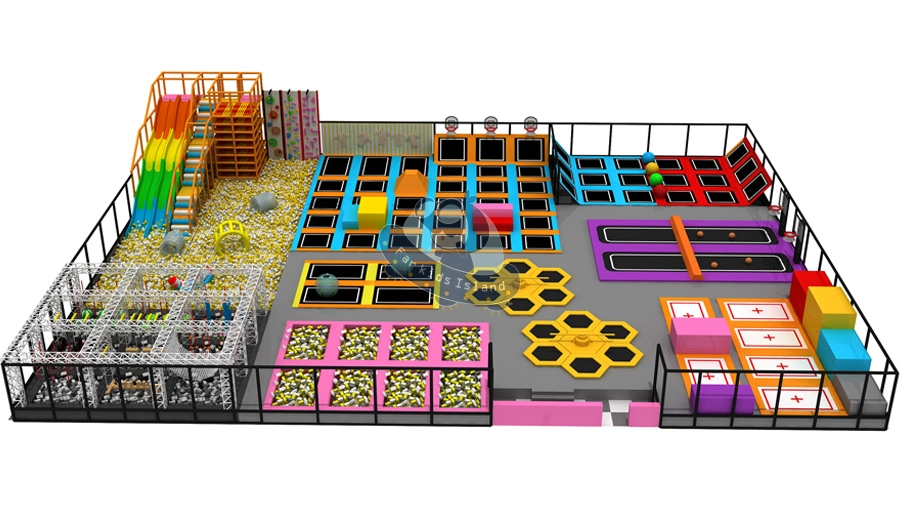
For operators developing a family entertainment center, purchasing related attractions from a coordinated manufacturing partner can simplify design integration. Indoor playground equipment can be planned alongside trampoline park equipment, soft-play areas, ninja courses, climbing elements, slides, and interactive features. Coordinated dimensions, colors, access routes, protective flooring, and supervision zones help create a more coherent guest experience.
Our manufacturing process should be evaluated through the same objective criteria applied to any supplier: material traceability, structural design, production inspection, surface finishing, padding quality, packaging, installation support, and after-sales service. Product breadth is valuable only when supported by engineering discipline and consistent quality control. Buyers should request a project-specific proposal rather than relying on a generic catalog price.
Demand evidence that supports the promised value
A reliable manufacturer should provide more than attractive renderings. Useful evidence includes completed project photographs, technical drawings, sample materials, testing documentation, production videos, inspection checklists, spare-parts information, and references appropriate to the destination market. Buyers may also request a video factory audit or an independent inspection before shipment.
Reputation should be assessed through delivery performance, responsiveness after installation, ability to resolve defects, and willingness to document corrective actions. The strongest supplier relationship is based on measurable commitments: approved drawings, manufacturing milestones, defined acceptance criteria, warranty response times, and a clear process for replacement parts. This structure protects both the project owner and the manufacturer from avoidable disputes.
When reviewing a proposal, decision-makers should compare safety evidence, engineering depth, component quality, installation scope, lifecycle support, and operational suitability before comparing the final numbers. Contact our team to review your venue requirements and explore indoor playground equipment and trampoline park equipment solutions designed around safety, durability, and long-term commercial value.
Frequently Asked Questions
What should be included when comparing quotations for indoor play equipment?
Buyers should compare the complete project scope, including design, engineering, materials, accessories, protective flooring, shipping, installation, taxes, inspection, training, warranty, and spare parts. A factory price alone does not represent the full investment.
How can buyers verify the quality of an indoor playground manufacturer?
Buyers should request applicable test reports, engineering drawings, material specifications, inspection records, production samples, factory-audit access, completed project references, and a documented quality-control process. Certificates should match the quoted model and configuration.
Why is the lowest equipment quotation not always the best value?
A low quotation may exclude installation, safety surfacing, fire-performance documentation, replacement parts, or engineering support. Lower-quality components can also increase maintenance, downtime, refurbishment, and replacement expenses over the attraction’s operating life.
What standards may apply to indoor playground and trampoline equipment?
Applicable requirements depend on the destination market and attraction type. Buyers may need to consider local building, fire, electrical, accessibility, insurance, and playground or amusement-device standards, including relevant ASTM or ISO requirements.
What quality details should be checked on soft components?
Inspect foam density and recovery, cover thickness, stitching, seams, zipper protection, cleaning compatibility, abrasion resistance, netting attachment, opening sizes, impact flooring, trampoline beds, edge pads, springs, and protective skirts.
How should total ownership value be calculated?
The calculation should include acquisition, freight, installation, inspection, cleaning, maintenance, replacement components, repairs, downtime, refurbishment, and disposal over a defined period. Warranty coverage and the expected service life of high-wear components should also be included.
How to Market Your New Custom Indoor Playground Facility
Custom Indoor Playground Material Guide for Durability
Indoor Playground Insurance and Liability: A Practical Operator Guide
Case Studies: High-Performing Trampoline Park Installations
Top Project Picks for Your Next Success



Have Questions or Need More Information?
Ready to Dive Deeper into This Topic?
Explore Detailed Insights and Start Applying Knowledge to Your Project
We’re here to help! Fill out the form below to reach out to our team. Whether you have a question about the article or need assistance with your project, we’re happy to assist you.
Trusted Playground Solution Provider
Professional one-stop indoor playground solutions with a strong focus on design, safety, and eco-friendly materials.
Our Location
No. 106, No. 27, Jiejin 2nd Road, Shiqiao Street, Panyu District, Guangzhou, China.
Say Hello
Social Links
Whatsapp: +8613632109166
Far kids island
Far kids island
Far kids island
TONGSHUO
Guo Wenshu