





How to Compare Indoor Playground Equipment Cost from Different Manufacturers and Suppliers
- How to Build a Like-for-Like Playground Equipment Cost Comparison
- Define the project scope before requesting prices
- Separate product price from the complete delivered investment
- Normalize the technical specification
- Technical and Commercial Factors That Change the Final Price
- Safety engineering and regulatory documentation
- Materials, manufacturing controls, and expected service life
- Customization, capacity, and future expansion
- How to Evaluate Supplier Capability Beyond the Quotation
- Review manufacturing evidence and project references
- Assess installation, commissioning, and after-sales support
- Calculate total cost of ownership and operating return
- Using Our Product and Engineering Scope in the Final Selection
- Evaluate the complete solution rather than isolated equipment lines
- Combine soft play and trampoline attractions strategically
- Use documentation and communication as commercial advantages
- Frequently Asked Questions
- What should be included in a quotation for an indoor play project?
- Why can two suppliers offer very different prices for similar playground layouts?
- How can buyers compare trampoline park equipment fairly?
- What documents should a manufacturer provide before purchase?
- Is the cheapest equipment quotation usually the best investment?
- How should buyers reduce unexpected costs after placing an order?
Comparing indoor playground equipment cost requires more than placing supplier quotations side by side. A reliable comparison evaluates the complete delivered project value, including concept design, play capacity, materials, safety engineering, manufacturing quality, installation, shipping, certifications, warranty coverage, maintenance, and future expansion. The lowest initial quotation may become the most expensive option if it excludes essential components, uses weaker materials, creates installation delays, or increases downtime. Buyers should therefore compare equivalent technical specifications, normalize commercial terms, verify compliance evidence, and calculate total cost of ownership before selecting a manufacturer or distributor.
How to Build a Like-for-Like Playground Equipment Cost Comparison
Define the project scope before requesting prices
A quotation is only meaningful when every supplier receives the same project brief. The brief should identify the venue type, available floor area, ceiling height, target age groups, expected daily attendance, operating hours, local fire requirements, desired attractions, accessibility objectives, and planned opening date. It should also state whether the project requires a toddler zone, multi-level soft play structure, rope elements, slides, climbing walls, ball pits, interactive games, party rooms, reception furniture, or a dedicated trampoline area.
Buyers should provide a dimensioned floor plan, structural restrictions, column locations, emergency exits, HVAC limitations, sprinkler positions, electrical capacity, and preferred visitor flow. Suppliers that receive incomplete information may issue provisional prices that change after engineering review. A detailed scope reduces variations and makes it easier to determine whether two proposals actually deliver the same usable capacity and attraction mix.
Separate product price from the complete delivered investment
Manufacturers may present prices on different commercial bases. One proposal may cover equipment only at the factory, while another includes packaging, sea freight, installation supervision, local labor, testing, and commissioning. The comparison should separate at least the following cost layers: design and engineering, equipment fabrication, optional attractions, packaging, inland transport, international freight, insurance, customs duties, local taxes, site preparation, installation, inspection, staff training, spare parts, and post-opening service.
Incoterms also affect the final financial exposure. Under an ex-works or factory-collection arrangement, the buyer carries more transport and export coordination responsibility. Under a delivered arrangement, more logistics may be included, but the contract must define destination, unloading, customs responsibility, and risk transfer. The ICC Incoterms 2020 rules provide the commercial framework, but they do not replace a detailed quotation or installation contract.
Normalize the technical specification
Price differences often originate in hidden specification differences rather than supplier margin. A lower quote may use thinner steel tubing, fewer connection points, lower-density foam, basic PVC, less protective padding, shorter platform heights, or a smaller number of play features. A higher quote may include reinforced frames, more extensive padding, commercial-grade flooring, improved visibility, replaceable wear parts, and engineered load calculations.
Request a bill of quantities and a technical schedule for every proposal. The schedule should identify quantities, dimensions, materials, surface treatments, foam density, fabric or PVC grade, fastener types, anchoring method, maximum user loads, guardrail dimensions, access points, and replacement-part availability. Any item described only as “standard accessories” or “complete safety package” should be clarified before commercial evaluation.
| Comparison category | What should be compared | Why it affects the investment |
|---|---|---|
| Play capacity | Usable play area, age segmentation, attraction count, and expected throughput | Capacity influences revenue potential and prevents buyers from mistaking a larger footprint for better commercial value |
| Structural system | Tube diameter, steel grade, connection design, anchors, platforms, and load documentation | Structural quality affects safety, durability, inspection requirements, and future repair expense |
| Soft components | Foam density, protective padding, PVC or fabric grade, stitching, and replaceable covers | These materials experience heavy daily wear and strongly influence maintenance cycles |
| Safety and compliance | Risk assessment, guardrails, impact protection, emergency access, documentation, and testing | Missing evidence can create approval delays, liability exposure, or costly redesign work |
| Project services | Layout design, shop drawings, installation, commissioning, training, and warranty response | Service scope affects opening schedule and the amount of work retained by the facility owner |
| Logistics | Packaging volume, shipping terms, customs responsibility, delivery schedule, and unloading | Freight and site handling can materially change the landed project value |
Technical and Commercial Factors That Change the Final Price
Safety engineering and regulatory documentation
Safety should be evaluated as an engineered system rather than a collection of colorful components. Buyers should ask how the supplier identifies fall risks, entrapment points, collision zones, sharp edges, pinch points, access restrictions, emergency evacuation routes, and cleaning hazards. A documented risk assessment should correspond to the actual layout, not a generic catalogue model.
The ISO 12100 safety risk assessment framework explains principles for identifying hazards and reducing risk through design. For playground projects, local authorities may also reference regional playground standards, building codes, fire codes, accessibility rules, and electrical requirements. In the United States, buyers can consult the U.S. Consumer Product Safety Commission Public Playground Safety Handbook for useful safety concepts, although commercial indoor facilities must still confirm the standards and approvals applicable to their jurisdiction.
For trampoline attractions, the technical review should cover bed construction, frame padding, netting, access control, fall zones, platform transitions, supervision requirements, and separation between users of different ages or abilities. ASTM F1918 addresses safety specifications for soft contained play equipment, while the relevant local authority may require additional fire, building, or occupancy documentation. A supplier unwilling to provide drawings, test records, material information, or a clear compliance pathway should not be evaluated on price alone.
Materials, manufacturing controls, and expected service life
Commercial play environments create repetitive impact, abrasion, contamination, and concentrated loads. The purchasing team should examine steel preparation, welding quality, corrosion protection, coating consistency, edge finishing, foam recovery, seam strength, fastener security, and the replacement process for damaged modules. Factory quality systems should include incoming-material inspection, production checkpoints, dimensional verification, final assembly review, packaging inspection, and traceable documentation.
Material claims should be specific. “High quality” does not identify a measurable grade, thickness, density, or test method. Ask for product datasheets and samples where appropriate, particularly for flooring, padding, artificial turf, trampoline beds, nets, vinyl surfaces, and laminated panels. Cleaning chemicals, ultraviolet exposure near windows, humidity, and temperature variation can influence material performance. A slightly higher purchase price may be justified when it reduces replacement frequency and keeps the attraction presentable during peak trading periods.
Customization, capacity, and future expansion
Custom design affects both manufacturing complexity and operational value. Curved platforms, themed façades, integrated branding, interactive technology, unusual ceiling constraints, and mixed-age circulation routes require more engineering than catalogue modules. The relevant question is not whether customization is expensive, but whether each custom feature improves visitor appeal, throughput, dwell time, supervision, or revenue performance.
Buyers should also consider modularity. A system that allows worn components to be replaced individually or new attractions to be added later may produce a better lifecycle result than a fixed structure that requires major reconstruction. Expansion planning should reserve access routes, electrical capacity, floor loading allowance, and operational space for future additions. This is especially important when a venue may later add trampoline park equipment, climbing attractions, interactive play, or party-zone capacity.
How to Evaluate Supplier Capability Beyond the Quotation
Review manufacturing evidence and project references
Supplier evaluation should include factory photographs, production videos, quality-control records, engineering drawings, packing lists, installation manuals, and references from comparable venues. References should be relevant in size, climate, user profile, and regulatory environment. A supplier experienced in small childcare rooms may not have the engineering, logistics, or installation resources required for a large family entertainment center.
Request contactable references and ask specific questions: Was the delivered scope complete? Did the shipment arrive with identifiable packages? Were drawings accurate? How were replacement parts handled? Did the attraction open on schedule? What maintenance issues occurred during the first year? Answers to these questions provide more decision value than a general statement about years in business.
Assess installation, commissioning, and after-sales support
Installation quality can determine whether a well-designed product performs as intended. The contract should specify who prepares the floor, receives the shipment, unloads containers, installs anchors, verifies levels, completes padding, performs final inspection, and trains operators. It should also define responsibility for local permits and third-party inspection.
After-sales terms should cover response times, warranty exclusions, labor and freight responsibility, spare-part pricing, technical support, inspection intervals, and procedures for reporting defects. Buyers should request a recommended spare-parts list for high-wear items such as padding, nets, fasteners, trampoline beds, socks, flooring sections, and protective covers. A supplier with a clear parts-identification system can reduce downtime and simplify annual maintenance budgeting.
Calculate total cost of ownership and operating return
A practical financial model includes initial purchase, freight, installation, permits, insurance, planned maintenance, consumables, repairs, replacement parts, cleaning labor, inspection fees, and expected refurbishment. It should also estimate revenue drivers such as hourly capacity, admission price, party bookings, memberships, food and beverage attachment, seasonal utilization, and available operating hours. The aim is not to predict revenue with false precision, but to compare how each design supports capacity and reliable operation.
Useful indicators include cost per usable square meter, cost per expected simultaneous user, annual maintenance cost as a percentage of the initial investment, attraction downtime, and payback under conservative, expected, and optimistic utilization scenarios. A proposal with a lower factory price but reduced capacity, weaker durability, or longer repair delays may deliver inferior returns. Conversely, an expensive custom attraction should be challenged if it adds visual complexity without improving throughput or customer spending.
Using Our Product and Engineering Scope in the Final Selection
Evaluate the complete solution rather than isolated equipment lines
Our product scope can be assessed using the same transparent procurement framework: confirm the layout, user capacity, materials, safety documentation, installation scope, delivery terms, warranty, and lifecycle support before comparing commercial value. A professional supplier should be able to translate the project brief into design drawings, a detailed bill of quantities, production specifications, packing information, and an implementation schedule.
For family entertainment centers, commercial play venues, shopping centers, resorts, childcare facilities, and community spaces, our indoor playground equipment can be evaluated according to age zoning, visual identity, circulation, supervision, cleaning access, structural requirements, and expansion potential. The assessment should focus on how the complete attraction supports safe operation and dependable visitor experience, not only on the number of colorful features included.
Combine soft play and trampoline attractions strategically
Our trampoline park equipment can be considered as part of a wider attraction mix when the venue requires higher-energy activities, youth programming, group events, or additional revenue zones. The design review should address separation between activity types, impact protection, user flow, staff sightlines, access control, emergency procedures, and the interaction between trampoline areas and soft-play attractions.
A combined concept can improve space utilization when the layout assigns appropriate zones to toddlers, children, teenagers, and accompanying adults. However, combining attractions should never create uncontrolled traffic or compromise supervision. Equipment selection, flooring transitions, queue management, acoustic treatment, and cleaning procedures should be developed as one operational plan.
Use documentation and communication as commercial advantages
Our team should be judged by the clarity of technical communication as well as by product appearance. Buyers should expect timely answers to engineering questions, revision-controlled drawings, transparent change orders, production updates, container-loading records, installation guidance, and practical maintenance information. These controls help investors protect the opening schedule and reduce uncertainty between deposit payment and final commissioning.
The strongest supplier relationship continues after delivery. Operator training, inspection checklists, cleaning guidance, replacement-part identification, and periodic technical support help preserve safety and presentation quality. When comparing proposals, buyers should assign a commercial value to these services because reliable support can reduce operational disruption and protect the venue's reputation over many years.
Before signing, the procurement team should complete a weighted scorecard covering technical compliance, safety evidence, manufacturing quality, capacity, design suitability, delivery schedule, installation, warranty, after-sales response, landed price, and lifecycle value. Each supplier should receive the same scoring definitions and documentary requirements. This method produces a defensible decision for investors, operators, distributors, and facility owners while reducing the risk of selecting an apparently inexpensive but incomplete solution.
Frequently Asked Questions
What should be included in a quotation for an indoor play project?
A complete quotation should identify design, equipment, optional attractions, packaging, freight, insurance, customs responsibility, installation, commissioning, training, warranty, spare parts, and applicable taxes or duties. It should also include drawings, quantities, materials, dimensions, delivery terms, and a payment schedule.
Why can two suppliers offer very different prices for similar playground layouts?
Price differences may result from variations in steel structure, padding, surface materials, play capacity, safety documentation, customization, installation scope, freight terms, warranty, or replacement-part support. A lower price is meaningful only after the technical and commercial scopes have been normalized.
How can buyers compare trampoline park equipment fairly?
Buyers should compare frame construction, trampoline beds, padding, nets, fall zones, access control, user separation, supervision requirements, installation, inspection documentation, spare parts, and warranty terms. The comparison should also assess how the attraction integrates with circulation, emergency access, and other venue activities.
What documents should a manufacturer provide before purchase?
Important documents include technical drawings, bills of quantities, material specifications, risk assessments, load information, installation manuals, maintenance instructions, packing lists, warranty terms, inspection or test records, and evidence of relevant standards or local approval pathways.
Is the cheapest equipment quotation usually the best investment?
Not necessarily. The best investment balances landed acquisition cost with safety, capacity, durability, installation quality, downtime risk, maintenance expense, customer appeal, and expansion potential. Total cost of ownership and expected operating return provide a more reliable basis than purchase price alone.
How should buyers reduce unexpected costs after placing an order?
Buyers should finalize the site survey, drawings, bill of quantities, Incoterms, installation responsibility, customs arrangements, electrical and structural requirements, acceptance criteria, warranty process, and change-order procedure before production begins. Clear documentation reduces scope gaps and late modifications.
Contact our team to review your project requirements and explore indoor playground equipment and trampoline park equipment solutions aligned with your space, budget, safety objectives, and business plan.
Commercial Indoor Playground Equipment Manufacturer for Distributors
Modular Designs for Scalable Indoor Playground Projects
Trampoline Park Equipment Buying Guide for Indoor Operators
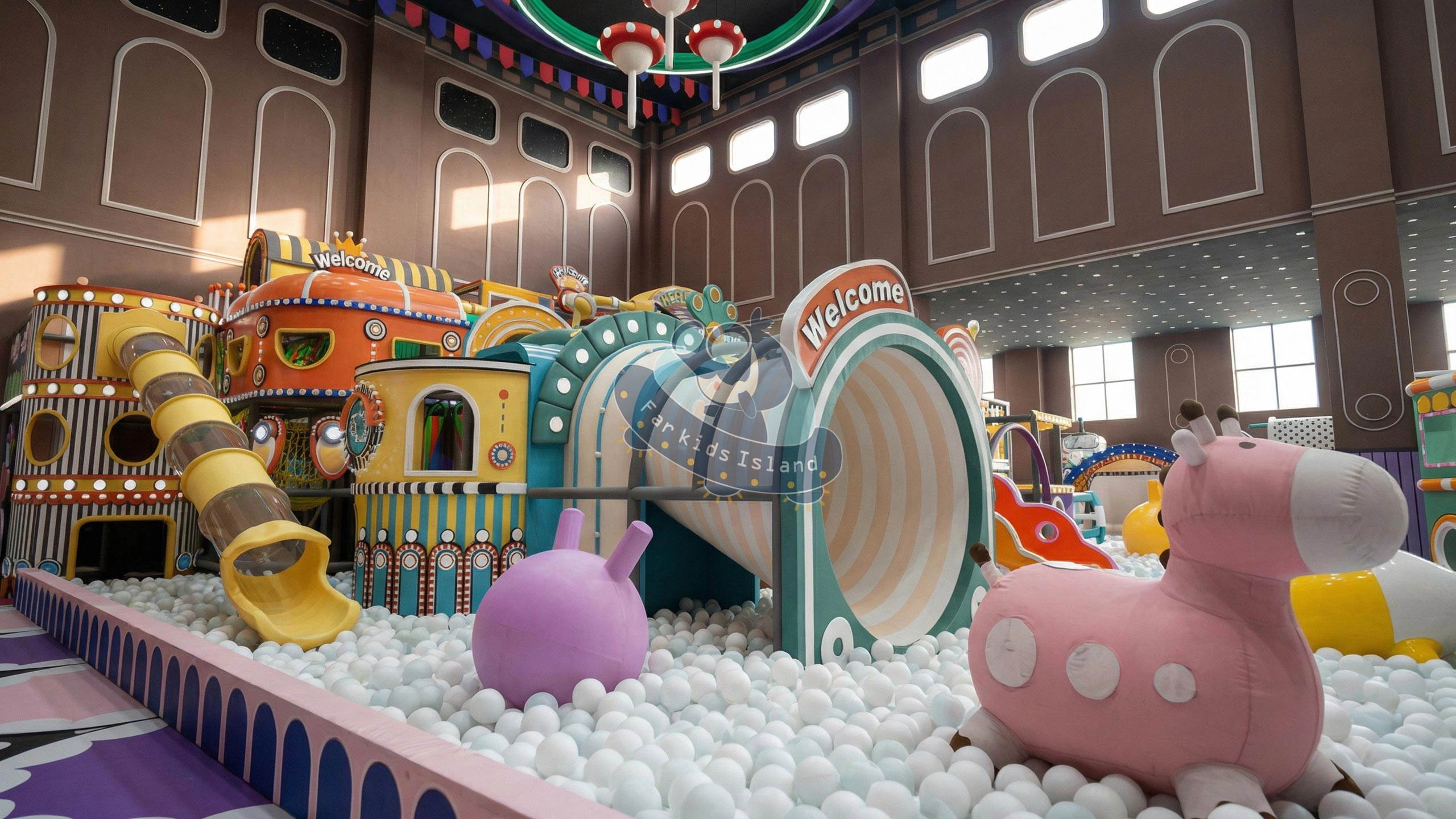
Far Kids Island Dream Carnival Adventure Indoor Playground (UAE)
Top Project Picks for Your Next Success



Have Questions or Need More Information?
Ready to Dive Deeper into This Topic?
Explore Detailed Insights and Start Applying Knowledge to Your Project
We’re here to help! Fill out the form below to reach out to our team. Whether you have a question about the article or need assistance with your project, we’re happy to assist you.
Trusted Playground Solution Provider
Professional one-stop indoor playground solutions with a strong focus on design, safety, and eco-friendly materials.
Our Location
No. 106, No. 27, Jiejin 2nd Road, Shiqiao Street, Panyu District, Guangzhou, China.
Say Hello
Social Links
Whatsapp: +8613632109166
Far kids island
Far kids island
Far kids island
TONGSHUO
Guo Wenshu