



Certifications Required for commercial trampoline park equipment
- Key Compliance Standards for Trampoline Park Projects
- ASTM F2970 for commercial trampoline facilities
- European and international conformity requirements
- Local building, fire, electrical, and accessibility approvals
- Documents Buyers Should Request Before Ordering
- Product and material documentation
- Engineering, testing, and installation records
- Operational and maintenance records
- How to Evaluate a Supplier’s Certification Package
- Separate company certifications from product compliance
- Check certificate scope, validity, and traceability
- Use risk-based acceptance criteria
- Far Kids Island’s Approach to Certified Indoor Play Projects
- Integrated design, manufacturing, and documentation
- Safety-focused materials and project-specific solutions
- Turnkey support from concept to opening
- Frequently Asked Questions
Commercial trampoline park equipment should be purchased with more than a product brochure and a general safety statement. Buyers should verify the applicable design standard, factory quality records, material compliance documents, structural calculations, installation procedures, inspection reports, and operating manuals before opening a facility. In the United States, ASTM F2970 is the principal reference for the design, manufacture, installation, operation, maintenance, and inspection of commercial trampoline parks. Projects serving European markets may also require conformity assessment under applicable EN requirements and European Union legislation. ISO 9001 can support supplier quality control, while certificates of conformity, test reports, and commissioning records provide project-specific evidence that the indoor playground equipment has been manufactured and installed as specified.
Key Compliance Standards for Trampoline Park Projects
ASTM F2970 for commercial trampoline facilities
ASTM F2970 is the most important standard to discuss with a supplier serving the North American market. It addresses the complete lifecycle of a trampoline park rather than focusing only on one jumping mat or frame. Its scope is relevant to design configuration, equipment manufacturing, installation, inspection, maintenance, staff procedures, and operational controls. Buyers should request written confirmation of which components and project processes are designed against the current applicable edition of the standard.
A supplier’s statement that a product is “ASTM certified” should be examined carefully. ASTM generally publishes voluntary consensus standards; it does not automatically issue a universal certificate for every product claiming compliance. A credible project file should identify the standard edition, test laboratory where applicable, equipment covered, limitations, and responsible party. The owner, designer, installer, and operator may each have different compliance responsibilities under local law and venue insurance requirements.
European and international conformity requirements
For projects in the European Economic Area, CE marking may apply when the equipment falls within relevant European Union product legislation. CE marking is a manufacturer’s declaration that applicable legal requirements have been assessed; it is not, by itself, proof that a complete entertainment venue is safe or that every operating procedure meets local requirements. Buyers should request the declaration of conformity, technical file summary, risk assessment, user instructions, and any applicable test reports.
EN 1176 is primarily associated with playground equipment and surfacing, while other EN documents may apply to gymnastic equipment, sports installations, electrical systems, fire protection, or building elements. The correct standard depends on the equipment type, jurisdiction, and intended use. A supplier should therefore provide a compliance matrix rather than applying one European standard indiscriminately to every attraction.
Local building, fire, electrical, and accessibility approvals
Product compliance does not replace approval of the venue. Commercial jumping parks commonly require building permits, occupancy approval, fire and emergency planning, electrical inspection, accessible route assessment, and local business or amusement-facility licensing. In the United States, the U.S. Consumer Product Safety Commission provides regulatory guidance for businesses, although local authorities and state requirements may impose additional obligations.
Project owners should coordinate the equipment layout with the architect, fire consultant, insurer, and authority having jurisdiction. Important issues include evacuation routes, exit visibility, fall zones, ceiling clearance, fire load, smoke control, emergency lighting, first-aid access, and separation between high-energy attractions. A technically compliant jumping system can still delay opening if the overall premises has not passed municipal inspections.
Documents Buyers Should Request Before Ordering
Product and material documentation
Each major component should be traceable to a bill of materials and a defined quality-control process. Request specifications for steel tubing, welds, padding, netting, springs, trampoline beds, foam blocks, fasteners, flooring, coatings, adhesives, and printed decorative surfaces. Material documentation should identify chemical restrictions, flame performance where required, durability expectations, and cleaning compatibility.
For children’s environments, buyers should also ask whether paints, plastics, foams, and fabrics have been assessed for restricted substances. Depending on the destination market, relevant documentation may include CPSIA-related testing, REACH declarations, phthalate testing, heavy-metal testing, formaldehyde information, or California Proposition 65 disclosures. These documents should be linked to actual production batches rather than generic files copied from unrelated products.
Engineering, testing, and installation records
A complete technical package normally includes layout drawings, anchoring details, load assumptions, structural calculations, fall-zone dimensions, padding specifications, netting details, electrical diagrams for illuminated or interactive attractions, and installation instructions. If the project includes elevated platforms, climbing elements, foam pits, ninja obstacles, or integrated indoor playground equipment, the documentation should explain how each attraction connects to adjacent structures.
Factory inspection records should cover incoming material checks, weld inspection, dimensional verification, padding thickness, surface finish, stitching, fastener torque, and final packing inspection. Where third-party testing is used, the report should identify the laboratory, sample, test method, date, and result. A certificate without a matching product description or test scope has limited procurement value.
Operational and maintenance records
Opening approval is only the beginning of compliance. Operators need daily opening checklists, staff training materials, user rules, incident reporting forms, cleaning schedules, equipment inspection intervals, repair procedures, and replacement-part information. ASTM F2970 places strong emphasis on inspection and operation, making these records important for risk management and insurance discussions.
Buyers should clarify who will perform the initial commissioning inspection and whether the supplier provides on-site training. The handover package should record damaged or incomplete items, corrective actions, final acceptance, and the date on which the owner assumes operational responsibility. Digital inspection software can improve traceability, but it does not remove the need for competent staff and documented physical checks.
| Document or approval | Primary purpose | Who should verify it | Typical timing |
|---|---|---|---|
| ASTM F2970 compliance statement and technical file | Supports design, manufacturing, installation, and operation decisions for trampoline parks | Owner, supplier, insurer, and qualified safety consultant | Design stage and final handover |
| Declaration of conformity and applicable EN documentation | Demonstrates assessment against relevant European legal and technical requirements | Importer, owner, and local compliance adviser | Before shipment and market placement |
| Material and chemical test reports | Confirms restricted-substance and material performance requirements | Buyer’s quality team or independent laboratory | Before production approval and by batch when required |
| Structural drawings and installation records | Shows that the installed attraction matches the engineered design | Qualified installer, engineer, and authority having jurisdiction | Construction and commissioning |
| Operational inspection and training records | Controls ongoing use, maintenance, incident response, and staff competence | Facility operator and insurer | At opening and throughout the operating life |
How to Evaluate a Supplier’s Certification Package
Separate company certifications from product compliance
ISO 9001 is a quality management system standard. The International Organization for Standardization explains that ISO 9001 focuses on consistent processes, customer requirements, continual improvement, and controlled production. It can be a valuable indicator of organizational discipline, but it does not certify that a specific trampoline layout is safe or compliant with ASTM F2970.
The same distinction applies to ISO 14001, occupational health and safety certifications, factory audit reports, and export qualifications. These credentials can strengthen supplier due diligence, yet they must be evaluated alongside project-specific drawings, tests, inspection records, and installation competence. Buyers should avoid treating a factory management certificate as a substitute for equipment conformity evidence.
Check certificate scope, validity, and traceability
Every document should be checked for the legal entity name, manufacturing location, certificate number, issue and expiry dates, certification scope, issuing organization, and product or process covered. The entity on the certificate should correspond to the contracting manufacturer or clearly documented production partner. Buyers should also confirm whether the certificate is current and independently verifiable through the issuer’s database.
A practical procurement schedule can divide documentation into four gates: concept approval, engineering approval, pre-production approval, and final acceptance. This prevents a late discovery that the proposed foam, netting, electrical component, or structural connection was not included in the original compliance evidence. The contract should also state who pays for retesting, redesign, replacement parts, and corrective work if the delivered system differs from approved drawings.
Use risk-based acceptance criteria
Not every attraction carries the same hazard profile. A toddler soft-play area, open jump court, angled wall trampoline, foam pit, climbing tower, and interactive projection system require different controls. Buyers should prioritize high-consequence elements such as elevated platforms, entrapment points, impact surfaces, access gates, suspension components, and electrical equipment near users.
Independent inspection is especially valuable when the supplier is unfamiliar with local permitting requirements. A qualified inspector can compare the installed system with the design file, verify clearances and anchorage, review padding and net tension, and identify operational gaps before public opening. This approach protects launch schedules and supports a defensible safety process for investors and insurers.
Far Kids Island’s Approach to Certified Indoor Play Projects
Integrated design, manufacturing, and documentation
Guangdong Tongshuo Industrial Co., Ltd., operating under the globally trusted brand Far Kids Island, is a premier manufacturer of commercial indoor and outdoor playgrounds in Guangzhou, China. Established in 2012 with manufacturing roots dating back to 1993, we bring more than 30 years of industry expertise to project planning, product development, and production control.
Our 20,000㎡ manufacturing facility is supported by more than 200 professionals and over 20 senior design experts. We integrate research and development, custom 3D design, in-house production, quality inspection, and global sales. This structure helps buyers maintain a clearer chain of responsibility from concept drawings through delivery and installation.
Safety-focused materials and project-specific solutions
Our philosophy is “Designed for Children, Built for Safety.” We use non-toxic, commercial-grade, sustainable materials and provide documentation designed to support ASTM and COC requirements where applicable to the project and destination market. Certification scope is always dependent on the product, jurisdiction, test method, and final installation, so our team works with buyers to identify the correct evidence rather than presenting a generic certificate as universal approval.
Our product portfolio includes indoor playground equipment, trampoline park equipment, soft-play systems, climbing attractions, ninja courses, interactive play features, and customized family entertainment center solutions. Designs can be adapted for schools, shopping malls, resorts, family entertainment centers, and mixed-use commercial venues. Space planning considers circulation, capacity, age zoning, supervision points, emergency access, branding, and revenue-generating attractions.
Turnkey support from concept to opening
Far Kids Island provides a turnkey service covering space planning, theme development, 3D visualization, manufacturing, packaging, delivery coordination, professional installation, and operational training. More than 30 countries have received our playground solutions, giving international project owners a practical starting point for export documentation and cross-border coordination.
Our team can help buyers build a project documentation checklist that includes drawings, material information, production inspections, installation records, maintenance guidance, and staff training. The objective is not merely to ship attractive equipment; it is to help the owner establish a safe, inspectable, and commercially practical entertainment environment. Buyers should still appoint local professionals to confirm building, fire, electrical, accessibility, and operating requirements in the target jurisdiction.
Contact Far Kids Island at sulla.tongshuo@gmail.com or visit our official website to review compliant indoor play and trampoline attraction solutions for your next project.
Frequently Asked Questions
Is ASTM F2970 a required certification for every trampoline park?
ASTM F2970 is the principal North American reference for trampoline park design, manufacture, installation, operation, maintenance, and inspection, but legal requirements depend on the project jurisdiction, insurer, authority having jurisdiction, and contract. Buyers should request a project-specific compliance statement rather than relying on a generic claim.
Does a CE mark prove that a complete trampoline park is safe?
No. CE marking indicates that applicable European Union legal requirements have been assessed for the relevant product. It does not automatically prove that a complete venue, layout, installation, operating procedure, or local building approval complies with every safety requirement.
What documents should a buyer request from a trampoline equipment supplier?
The buyer should request applicable standards information, declarations of conformity, material and chemical test reports, structural drawings, anchoring details, installation instructions, factory inspection records, operating manuals, maintenance schedules, staff training materials, and final commissioning records.
Is ISO 9001 a product safety certificate?
No. ISO 9001 is a quality management system standard that addresses controlled processes, customer requirements, and continual improvement. It can support supplier due diligence, but it does not certify that a particular trampoline layout complies with ASTM F2970 or local venue regulations.
Why are installation and operational records important after delivery?
Opening approval is only the beginning of compliance. Daily inspections, maintenance records, staff training, incident reporting, repair procedures, and commissioning documents help control ongoing risks, support insurance discussions, and demonstrate that the facility is operated according to the supplier’s instructions and applicable requirements.
Can a supplier’s certificate replace local building and fire approvals?
No. Equipment documentation does not replace building permits, occupancy approval, fire and emergency planning, electrical inspection, accessibility assessment, or local amusement-facility licensing. These approvals should be coordinated with the architect, fire consultant, insurer, and authority having jurisdiction.
Commercial Indoor Playground Equipment Manufacturer Warranty, Installation, and After-Sales Service Guide
Top 10 climbing walls for kids Manufacturers and Supplier Brands in China
Turnkey Indoor Playground Solutions: What Does the Package Include?
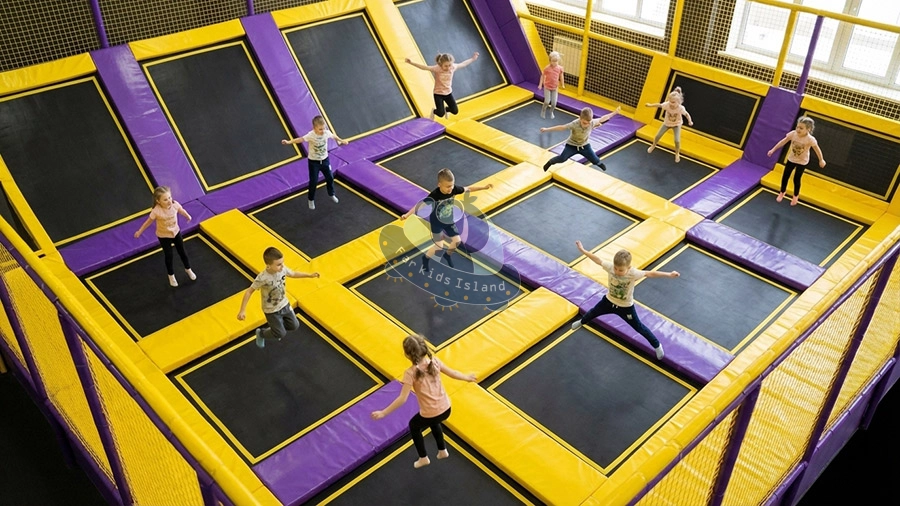
Indoor Trampoline and Soft Play Park — 2000 sqm FEC Solution
Top Project Picks for Your Next Success


Have Questions or Need More Information?
Ready to Dive Deeper into This Topic?
Explore Detailed Insights and Start Applying Knowledge to Your Project
We’re here to help! Fill out the form below to reach out to our team. Whether you have a question about the article or need assistance with your project, we’re happy to assist you.
Trusted Playground Solution Provider
Professional one-stop indoor playground solutions with a strong focus on design, safety, and eco-friendly materials.
Our Location
No. 106, No. 27, Jiejin 2nd Road, Shiqiao Street, Panyu District, Guangzhou, China.
Say Hello
Social Links
Whatsapp: +8613632109166
Far kids island
Far kids island
Far kids island
TONGSHUO
Guo Wenshu