





How to Calculate the ROI and Total Cost of Ownership of Indoor Playground Equipment
- Build a lifecycle investment model for an indoor play venue
- Separate the installed investment from the quoted equipment price
- Forecast operating costs across the full service life
- Define the useful-life and residual-value assumptions
- Calculate ROI, payback, and total ownership cost
- Use transparent formulas and keep the measures distinct
- Work through an illustrative example
- Compare appraisal methods before selecting a proposal
- Stress-test the assumptions that drive project returns
- Model capacity, utilization, and seasonal demand
- Include safety, maintenance, and downtime in the financial case
- Use real local cost data and document uncertainty
- Turn the financial model into a procurement decision
- Compare offers on scope, serviceability, and lifecycle evidence
- Ask for evidence that reduces uncertainty
- Make approval contingent on measurable decision criteria
- Frequently Asked Questions
To evaluate indoor playground equipment cost, buyers should compare more than the initial quotation: calculate the full installed investment, forecast recurring operating expenses and replacement reserves, estimate attributable revenue, and assess return over a defined operating period. A practical model includes equipment, freight, installation, fit-out, permits, insurance, staffing, utilities, cleaning, repairs, downtime, and end-of-life value. Annual operating cash flow divided by initial investment gives a simple annual return measure, while payback period and discounted cash flow show how long capital may take to recover and how future cash flows compare in present-value terms. Because results depend on local demand, pricing, lease terms, safety obligations, and operating hours, every assumption should be documented and tested against conservative, expected, and high-performance scenarios.
Build a lifecycle investment model for an indoor play venue
Separate the installed investment from the quoted equipment price
A supplier quotation may cover the play structure but exclude substantial costs required to open the venue. The initial investment should therefore be built from a complete project budget, not a product subtotal. Include the play system, delivery, import duties where applicable, unloading, installation, inspections, flooring, lighting, HVAC changes, electrical work, fire protection, signage, design, permits, professional fees, pre-opening payroll, and launch marketing. Lease deposits and tenant improvements also matter because they tie up cash even when they are not part of the equipment invoice.
Request an itemized scope that identifies what is included, excluded, provisional, or dependent on site conditions. Confirm whether installation covers anchoring, access equipment, waste removal, testing, and handover documentation. For a fair comparison, normalize quotations to the same play capacity, age groups, usable floor area, safety features, materials, warranty terms, delivery basis, and installation responsibilities. A low equipment price can become a higher installed cost if the buyer later has to fund omitted site work or coordination.
Forecast operating costs across the full service life
Operating expenses recur after opening and can materially change project economics. Model labor for admissions, supervision, cleaning, maintenance, and management; utilities; insurance; payment processing; software; consumables; marketing; rent; and routine inspections. Add planned maintenance and a replacement reserve for high-wear components such as nets, padding, fasteners, mats, and soft-play elements. Treat repairs and replacements as separate line items so the model does not hide future cash requirements inside a single annual allowance.
Use operating assumptions that reflect the actual business model. A family entertainment center may sell admissions, memberships, parties, food, and merchandise, while a mall attraction may rely on timed entry or revenue sharing. Forecast each revenue stream separately and account for discounts, refunds, taxes collected on behalf of authorities, and payment fees. If revenue depends on school holidays or weekends, use monthly or seasonal estimates rather than multiplying a peak-day result by 365.
Define the useful-life and residual-value assumptions
The analysis period should reflect the planned ownership horizon, lease term, financing structure, and expected refurbishment cycle. A longer horizon captures more operating years but also introduces uncertainty about demand, maintenance, rent, and component replacement. Record whether the model assumes equipment remains in place, is refurbished, is relocated, or is sold at the end of the period. Assign residual value only where a credible resale or reuse pathway exists; otherwise, use a cautious estimate and include removal or disposal costs where relevant.
Safety and quality requirements influence both the initial specification and ongoing ownership costs. Buyers should identify the standards applicable to the product type, jurisdiction, and installation. For example, ASTM F1918 covers performance requirements for soft contained play equipment; it should not be treated as a universal substitute for local codes or other relevant standards. A supplier should clarify the standard and test evidence applicable to the proposed equipment and provide operating, inspection, and maintenance documentation.
Calculate ROI, payback, and total ownership cost
Use transparent formulas and keep the measures distinct
Total cost of ownership (TCO) is the sum of the costs required to acquire, install, operate, maintain, and retire an asset over a stated period, less any defensible residual value. A simple undiscounted formula is: TCO = initial installed investment + cumulative operating costs + planned repairs and replacements + end-of-life costs − residual value. For a more complete investment appraisal, discount future cash flows using a stated discount rate and calculate net present value (NPV). The discount rate should be selected by the project owner or finance team, not chosen merely to make a proposal appear attractive.
For a simple annual operating return, divide annual operating cash flow attributable to the attraction by the initial investment, then multiply by 100. Define cash flow consistently: revenue less the operating costs included in the model. Simple payback is initial investment divided by annual net operating cash flow when that cash flow is stable. These are screening measures, not a complete investment decision. They do not automatically account for taxes, financing, depreciation, changing demand, or the time value of money. The U.S. Small Business Administration’s startup-cost guidance is a useful reminder to identify and organize both one-time and recurring business expenses before launch.
Work through an illustrative example
Consider a hypothetical venue with an installed initial investment of $300,000, annual revenue of $360,000 attributable to the attraction, and annual operating expenses of $270,000. Annual operating cash flow before financing and tax is $90,000. The simple annual operating return is $90,000 divided by $300,000, or 30%, and simple payback is $300,000 divided by $90,000, or approximately 3.3 years. These figures are illustrative arithmetic, not an industry benchmark or a forecast for a particular location.
For a ten-year undiscounted ownership view, assume operating expenses remain $270,000 per year, planned repairs and replacements total $60,000 across the period, end-of-life removal costs are excluded, and the equipment has a $20,000 residual value. TCO would be $300,000 + ($270,000 × 10) + $60,000 − $20,000 = $3,040,000. The revenue forecast is not subtracted from TCO; it is assessed separately to understand profitability and investment return. If costs, prices, or visitor volume change over time, the model should use year-by-year forecasts instead of flat assumptions.
Compare appraisal methods before selecting a proposal
Different financial views answer different procurement questions. A price-only comparison can help screen quotations, but it does not show whether a lower initial outlay leads to greater long-term expense. The table distinguishes common measures and the inputs they require. The calculations are standard financial methods; any numerical result remains dependent on the project’s verified assumptions.
| Measure | Basic calculation | Best used to answer | Main limitation |
|---|---|---|---|
| Initial installed investment | Equipment + delivery + installation + site and opening costs | How much capital is needed to open? | Does not include future operating or replacement costs |
| Annual operating return | Annual operating cash flow ÷ initial investment × 100 | What is the first-year cash return under the stated assumptions? | Does not reflect changing cash flows or the time value of money |
| Simple payback | Initial investment ÷ annual net operating cash flow | How long may recovery take if annual cash flow is stable? | Ignores cash flows after payback and discounted value |
| Lifecycle TCO | Acquisition + operating + maintenance + retirement costs − residual value | What does ownership cost over the selected period? | Results depend on period, cost completeness, and residual-value assumptions |
| Net present value | Present value of forecast net cash flows − initial investment | Does the investment create value at the selected discount rate? | Highly sensitive to forecasts and discount-rate selection |
Stress-test the assumptions that drive project returns
Model capacity, utilization, and seasonal demand
Revenue depends on how many customers the venue can serve, how often they visit, and how much they spend—not simply on the maximum capacity of the structure. Estimate paid visits by day type and season, then consider practical constraints such as session duration, cleaning turnarounds, supervision ratios, party bookings, and peak-time queues. Separate available capacity from utilized capacity. A structure may support a certain number of users at once, but that figure does not equal daily attendance or paid admissions.
Build at least three scenarios. A conservative case can combine slower visitor growth, lower average spend, higher staffing needs, and a longer opening ramp. An expected case should use the best available local evidence, such as comparable attractions, pre-sales, footfall data, or operator history. A stronger case can test upside without becoming the basis for a financing decision. Sensitivity analysis should show which variables—attendance, ticket price, labor, rent, or replacement frequency—have the greatest effect on payback and NPV.
Include safety, maintenance, and downtime in the financial case
Maintenance is a planned cost of keeping an attraction usable and safe, not an optional allowance to be removed when budgets are tight. Establish who performs routine checks, who can complete repairs, how quickly replacement parts can be obtained, and what records must be retained. Include the cost of staff training, inspection time, and temporary closure of affected areas. Equipment-specific instructions and applicable local regulations should guide the maintenance plan.
Downtime can reduce admission revenue while fixed costs continue. A practical forecast can estimate expected closed days or reduced capacity for planned servicing and repairs, then test the financial impact of a longer disruption. Buyers should also ask how warranty coverage is triggered, which components are excluded, how claims are documented, and who pays freight or labor for replacements. Quality-management systems can support consistent manufacturing processes, but a certificate alone does not prove that a particular design is suitable for a specific site; project-level specifications and evidence still require review. The ISO 9001 overview explains the quality-management-system standard, which buyers can consider as one part of supplier due diligence.
Use real local cost data and document uncertainty
Utility assumptions should come from the actual site, operating schedule, equipment loads, and local tariff—not a generic national estimate. Where available, request historical bills or a landlord’s utility schedule and clarify how common-area charges are allocated. The U.S. Energy Information Administration electricity data provides public electricity information, but a project should use its applicable local rate and consumption estimate for budgeting. Labor, insurance, rent, and taxes also vary by location and business structure, so obtain local quotes or advice rather than applying a broad industry average.
Keep a dated assumptions register alongside the spreadsheet. For each input, record the source, owner, confidence level, and next validation step. Label estimates separately from contracted prices and verified operating history. This simple discipline makes revisions easier when lease terms, layout, supplier scope, or market evidence changes, and helps lenders, investors, and internal approvers understand why the projected result may differ from actual performance.
Turn the financial model into a procurement decision
Compare offers on scope, serviceability, and lifecycle evidence
When evaluating our indoor playground equipment and trampoline park equipment, buyers can apply the same lifecycle framework to every proposed configuration. Request a clearly itemized commercial proposal covering product scope, layout assumptions, materials, installation responsibilities, delivery terms, warranty conditions, maintenance guidance, and documentation supplied at handover. This makes it easier to compare proposals on equivalent requirements rather than headline price alone. If the equipment mix changes, update the model to reflect any difference in capacity, usable area, staffing, utility needs, upkeep, or likely customer appeal.
Our product categories are relevant to operators planning soft-play attractions, trampoline-based activities, or a mixed family entertainment venue. The financial case should be built around the buyer’s location and operating plan rather than a generic promise of returns. We encourage buyers to validate proposed layouts against site dimensions, intended age groups, circulation, supervision, accessibility, and applicable local requirements, then connect those decisions to the same cost and revenue assumptions used in the investment model.
Ask for evidence that reduces uncertainty
Procurement teams should request documents that allow technical and commercial assumptions to be checked: drawings, product specifications, material details, applicable test reports or conformity documents, installation scope, warranty terms, care instructions, and spare-parts information. Clarify the process for design approval, production updates, delivery coordination, installation acceptance, and resolving defects. The precise documents depend on the project, equipment, and destination market; a buyer should confirm local regulatory requirements with qualified professionals where needed.
Our team can support a more useful quotation review when buyers provide the intended site area, ceiling height, target age range, expected attendance, preferred attraction mix, and project schedule. These inputs help align the proposed indoor playground equipment or trampoline park equipment with the operating concept and make scope gaps easier to identify before contracting. Buyers should still validate the business forecast independently and confirm that the final technical package meets the project’s safety, building, and insurance requirements.
Make approval contingent on measurable decision criteria
Before committing capital, define decision thresholds such as a maximum installed budget, minimum expected operating cash flow, acceptable payback range, required contingency, and minimum evidence for safety and serviceability. Confirm who owns each assumption and who approves deviations. If the proposal exceeds the budget, evaluate specific trade-offs—capacity, theming, phasing, or optional features—rather than removing essential maintenance provisions or required safety measures.
After opening, compare actual results with the original model at regular intervals. Track paid visits, average spend, party and membership sales, labor hours, utility use, repair frequency, downtime, and customer feedback. This operating data improves future forecasts and can identify when pricing, staffing, marketing, or maintenance routines need adjustment. A disciplined TCO model is not a one-time spreadsheet; it is a management tool linking procurement decisions to operational performance.
Contact our team to discuss indoor playground equipment or trampoline park equipment and request a project proposal aligned with your site, operating plan, and lifecycle cost assumptions.
Frequently Asked Questions
What costs should be included in the total cost of ownership of an indoor playground?
Include the initial installed investment, such as equipment, delivery, installation, site work, permits, and opening costs; recurring expenses such as labor, utilities, insurance, cleaning, and software; planned maintenance and replacement reserves; and end-of-life costs, less any defensible residual value.
How do you calculate ROI for an indoor playground investment?
For a simple annual operating return, divide annual operating cash flow attributable to the attraction by the initial investment and multiply by 100. Define cash flow consistently as revenue less the operating costs included in the model. This screening measure does not automatically account for taxes, financing, depreciation, changing demand, or the time value of money.
How is the payback period calculated for play equipment?
When annual net operating cash flow is stable, divide the initial investment by annual net operating cash flow. Treat the result as a simple estimate because it does not reflect changing cash flows, discounted value, or cash flows after payback.
What is the difference between ROI and total cost of ownership?
ROI compares investment with the operating cash flow or benefit generated under a stated definition, while total cost of ownership adds the costs of acquisition, installation, operation, maintenance, and retirement over a selected period, less any defensible residual value. TCO describes lifecycle spending; it does not by itself measure revenue or profitability.
How can buyers compare indoor playground supplier quotations fairly?
Normalize quotations to the same equipment scope, capacity, age groups, usable area, safety requirements, materials, warranty terms, delivery basis, installation responsibilities, and documentation. Check which site works and services are excluded, and compare lifecycle costs rather than headline equipment prices alone.
What operating assumptions have the greatest effect on projected returns?
Attendance and utilization, average customer spend, staffing, rent, utilities, maintenance and replacement frequency, and downtime can materially affect projected results. Test conservative, expected, and higher-performance scenarios using local evidence and documented assumptions.
Materials Guide: Durable Components for Indoor Playground Equipment
Cost & ROI: How Much to Invest in Trampoline Parks
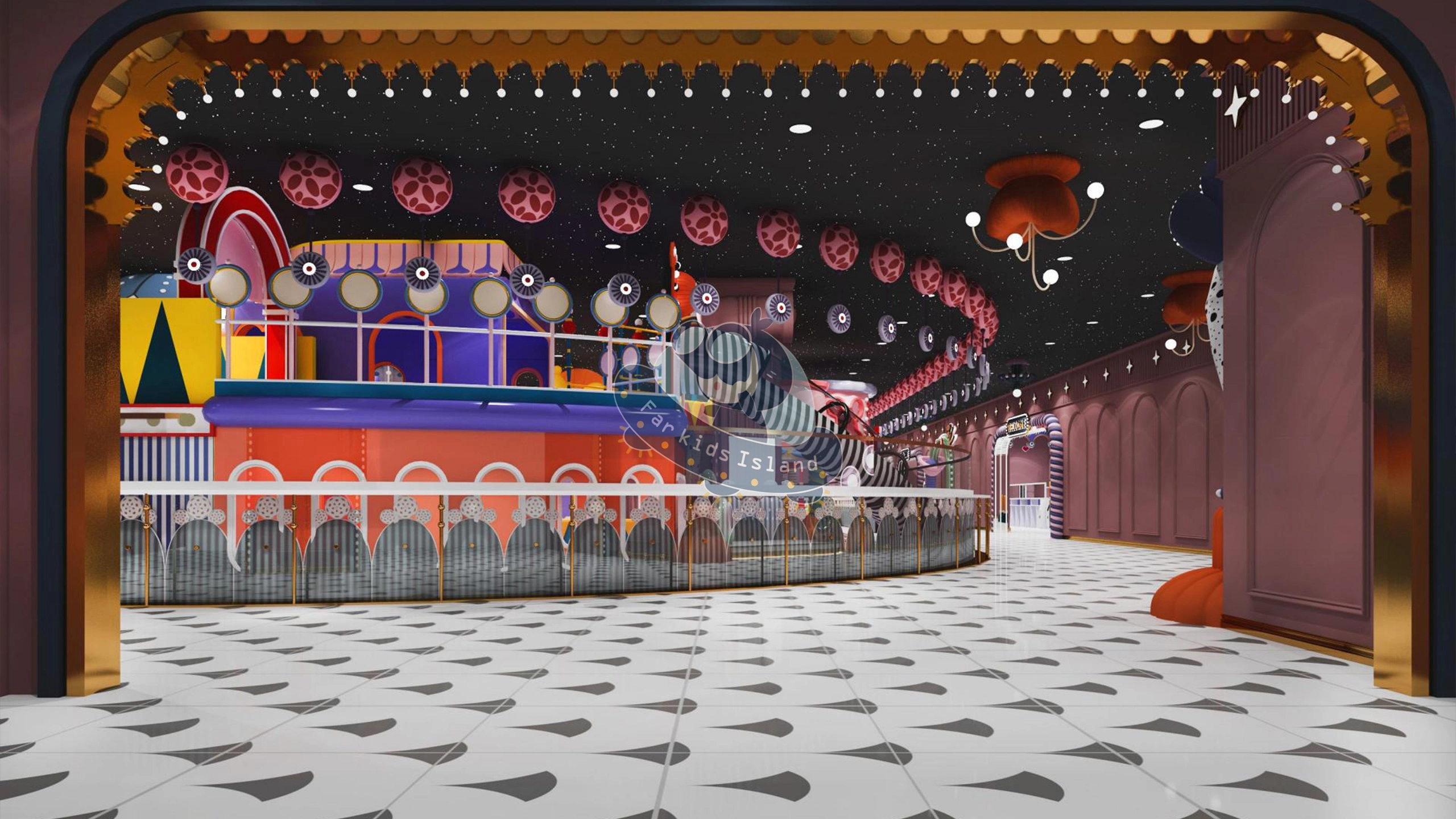
Far Kids Island Little Bubble Fairy Tale Town — Commercial Indoor Playground Equipment for India
Custom Indoor Playground Safety Certifications and Pre-Shipment Testing
Top Project Picks for Your Next Success



Have Questions or Need More Information?
Ready to Dive Deeper into This Topic?
Explore Detailed Insights and Start Applying Knowledge to Your Project
We’re here to help! Fill out the form below to reach out to our team. Whether you have a question about the article or need assistance with your project, we’re happy to assist you.
Trusted Playground Solution Provider
Professional one-stop indoor playground solutions with a strong focus on design, safety, and eco-friendly materials.
Our Location
No. 106, No. 27, Jiejin 2nd Road, Shiqiao Street, Panyu District, Guangzhou, China.
Say Hello
Social Links
Whatsapp: +8613632109166
Far kids island
Far kids island
Far kids island
TONGSHUO
Guo Wenshu