





Adventure Park Equipment Manufacturer vs Supplier
- How Factory Partners and Equipment Suppliers Differ
- What a manufacturing partner typically controls
- What an equipment supplier typically coordinates
- Compare the responsibilities, not just the labels
- Evaluate Risk, Compliance, and Total Project Cost
- Check standards against the equipment and location
- Review engineering, materials, and installation controls
- Compare lifecycle cost and operational readiness
- Select a Partner That Fits the Project Delivery Model
- Use due diligence questions before awarding the contract
- Make responsibility visible in the contract
- How We Approach Indoor Play and Trampoline Projects
- Plan equipment around the venue and operator
- Confirm scope and evidence before production
- Build lifecycle support into procurement
- Frequently Asked Questions
Choosing an adventure park equipment manufacturer or a supplier is not simply a choice between factory-direct pricing and a convenient point of contact. The right partner depends on whether a project needs custom engineering, coordinated sourcing, installation support, documented quality controls, and accountable after-sales service. A manufacturer generally controls product design and production, while a supplier may represent one or more factories and coordinate purchasing, logistics, or installation. Because these roles can overlap, buyers should verify who makes each component, who approves the design, which standards apply, and who is contractually responsible when a problem occurs. For indoor playground equipment and trampoline park equipment, those checks can influence safety, opening schedules, operating costs, and future expansion.
How Factory Partners and Equipment Suppliers Differ
Industry labels are not always used consistently. A company may manufacture some products, source others, and subcontract installation. Procurement teams should therefore assess the actual operating model rather than relying on a title in a brochure or website. The key distinction is control: who owns the engineering decisions, controls production processes, verifies materials, and resolves nonconformities?
What a manufacturing partner typically controls
A factory-based partner may manage product engineering, material selection, fabrication, assembly, and production inspections. Direct access to those functions can help when a project requires custom dimensions, unusual site constraints, branded finishes, or a coordinated equipment package. Buyers can ask to review factory quality procedures, production records, component specifications, and examples of completed projects. These details help establish whether the company has meaningful control over the equipment or only coordinates orders with another producer.
Direct manufacturing does not automatically mean lower cost or lower risk. A factory may have limited local installation coverage, may not provide complete project management, or may rely on third parties for specialist work. The buyer should confirm which services are included in the quotation and which require separate contracts. A lower equipment price can be offset by freight, customs, local engineering, installation, commissioning, spare parts, and warranty administration.
What an equipment supplier typically coordinates
A supplier or integrator may source equipment from multiple factories and consolidate products into a project package. This model can simplify procurement when a venue needs several attraction types, a single commercial contact, or regional delivery and installation coordination. Some suppliers also offer layout planning, project scheduling, and local service networks. Their value depends on the quality of supplier qualification and the clarity of responsibility across the supply chain.
Buyers should request the names and roles of the factories that will produce major equipment, along with the process for approving substitutions. A supplier that cannot identify the origin of critical components may create traceability gaps. Contracts should specify who is responsible for design approvals, inspection, defect correction, spare-parts availability, and warranty claims if the equipment is sourced from a third party.
Compare the responsibilities, not just the labels
| Procurement factor | Direct manufacturing relationship | Supplier or integrator relationship | Buyer verification |
|---|---|---|---|
| Product origin | May produce equipment in its own facility | May source from one or several factories | Request factory identity and component origin in writing |
| Customization | Can offer direct access to production and engineering decisions | Can coordinate custom work across brands or factories | Confirm design approval steps, tolerances, and change control |
| Project coordination | May focus primarily on its own product range | May consolidate purchasing, logistics, and installation | Define scope, milestones, exclusions, and named project contacts |
| Quality documentation | Can provide production and inspection records for its products | Must collect and maintain records across its supply chain | Specify required documents, acceptance criteria, and traceability |
| After-sales responsibility | May provide factory support or use local service partners | May provide a single service channel or coordinate with factories | Set response process, warranty terms, parts lead times, and escalation |
The table describes common commercial models, not guarantees. A capable supplier can have strong technical oversight, while a manufacturer can have limited project services. The contract and evidence should establish what applies to the specific project.
Evaluate Risk, Compliance, and Total Project Cost
Adventure attractions combine equipment, building conditions, operating procedures, and user behavior. A procurement review should therefore cover more than product appearance and initial price. Buyers need to understand how the proposed design fits the site, what technical documentation supports it, and how the owner will inspect and maintain it after opening.
Check standards against the equipment and location
Applicable requirements depend on the equipment type, intended users, venue, and jurisdiction. For example, ASTM International publishes ASTM F2970, Standard Practice for Design, Manufacture, Installation, Operation, Maintenance, Inspection and Major Modification of Trampoline Courts. The U.S. Consumer Product Safety Commission provides a Public Playground Safety Handbook with guidance for public playground environments. These references do not automatically cover every commercial attraction or replace local legal review. Project owners should identify the applicable codes and standards with qualified design professionals and the relevant authorities.
Ask the prospective partner to map each product category to the standards and test evidence claimed for it. Verify the scope, issuing body, date, product model, and whether the document applies to the actual configuration being purchased. A certificate for one product family should not be assumed to cover every custom layout or component. For quality management, ISO 9001:2015 describes requirements for a quality management system; certification, when claimed, is not a product safety certification and should be checked for scope and validity.
Review engineering, materials, and installation controls
Before approval, request drawings showing equipment footprints, circulation routes, access points, clearances, anchoring, and interfaces with the building. Confirm who is responsible for structural calculations and site-specific engineering. The project team should also establish how changes to dimensions, materials, finishes, or suppliers are reviewed and documented. On-site conditions such as floor levels, ceiling height, columns, fire protection, and access for maintenance can affect whether a proposed layout is practical.
Quality review should be tied to evidence rather than broad assurances. Depending on the project, useful records may include material specifications, inspection plans, production checks, installation instructions, maintenance schedules, and commissioning or handover documents. Establish acceptance criteria before production begins, including how defects are recorded, corrected, and re-inspected. For trampoline courts, clarify inspection responsibilities and operating procedures as well as the equipment supply itself.
Compare lifecycle cost and operational readiness
A meaningful commercial comparison includes more than the purchase order. Estimate freight, duties, installation, local compliance work, staff training, routine inspections, replacement parts, planned downtime, and future expansion. Compare warranty exclusions and claim procedures, not just warranty duration. Ask which parts are stocked, where they are held, and what information is needed to identify replacements. These questions are especially important when equipment includes custom-fabricated elements or components from several producers.
Operational readiness also affects return on investment. A complete handover should clarify permitted use, capacity assumptions, inspection routines, cleaning guidance, maintenance intervals, and escalation procedures. Owners should budget for trained staff and regular maintenance rather than treating those activities as optional. The IAAPA safety resources provide industry information for attraction operators; operators should still confirm which rules and procedures apply to their own facility and jurisdiction.
Select a Partner That Fits the Project Delivery Model
The strongest procurement decision aligns the partner’s capabilities with the project’s risk profile. A straightforward replacement package may suit a supplier with dependable sourcing and local service. A bespoke venue with unusual geometry, integrated attractions, or a complex opening schedule may benefit from direct engineering access or a lead integrator with clear authority over subcontractors. In either case, buyers should evaluate references relevant to the equipment type, venue scale, and delivery conditions.
Use due diligence questions before awarding the contract
- Which legal entity signs the contract, and which facility will produce each major product?
- Who is accountable for design coordination, site measurements, and approval of technical drawings?
- What standards, tests, and documentation apply to each equipment category and installed configuration?
- How are substitutions, design changes, nonconforming products, and site issues documented and approved?
- What installation, commissioning, training, maintenance, and warranty services are included?
- How are spare parts identified and supplied, and what is the process for urgent operational issues?
References should be checked with questions about delivery accuracy, responsiveness during installation, defect resolution, and availability of support after opening. Where possible, buyers should review completed installations or speak with operators whose projects are comparable. A polished rendering is useful for concept review, but it does not demonstrate production control, installation quality, or long-term service performance.
Make responsibility visible in the contract
Contracts should translate the selected delivery model into specific obligations. Include an approved product schedule, drawings, material and finish specifications, delivery milestones, inspection requirements, acceptance criteria, change-control procedures, warranty terms, and service contacts. If several companies are involved, identify the lead party for coordination and define how disputes or delays between subcontractors will be managed. Clear allocation reduces the risk that the owner becomes the default coordinator when a component, shipment, or installation task is late.
How We Approach Indoor Play and Trampoline Projects
For buyers evaluating indoor playground equipment and trampoline park equipment, the useful question is not only who builds the products, but how the proposed range supports the venue’s operating model. Our product focus spans these two indoor attraction categories, where layout, user flow, equipment selection, and maintenance planning must be considered together. Project requirements differ by available floor area, audience, design brief, local rules, and operating plan, so product selection should begin with a documented scope rather than a generic package.
Plan equipment around the venue and operator
Our approach is to connect the requested product mix with the project’s practical constraints: site dimensions, circulation, intended users, visual direction, and operational needs. For an indoor play venue, buyers may need to coordinate play structures and related features with circulation and supervision. For a trampoline park, the equipment plan should be reviewed alongside court configuration, access, inspection, and operating procedures. These decisions require confirmation against site-specific drawings and applicable requirements; product descriptions alone cannot establish suitability.
Confirm scope and evidence before production
We encourage buyers to define the expected deliverables early, including product configuration, drawings, finish selections, documentation, delivery responsibilities, and handover needs. A written scope makes it easier to compare proposals and identify exclusions before they affect schedule or budget. Buyers should request the technical and quality records relevant to the products being offered and verify any certification or compliance claim independently. This disciplined review supports better coordination among the owner, design professionals, contractors, and equipment provider.
Build lifecycle support into procurement
We recommend treating maintenance access, inspection routines, replacement parts, and staff handover as part of project planning rather than post-opening issues. The owner should establish who receives service requests, how product identifiers are recorded, and what information is required to investigate a problem. These arrangements can improve continuity after opening and help operators plan maintenance costs. Our indoor playground and trampoline park product categories are intended to support project discussions around the equipment mix; final specifications and service commitments should be confirmed in the project quotation and contract.
In short, select a production partner or sourcing integrator based on verifiable control, relevant documentation, clearly assigned responsibility, and total lifecycle value. A well-defined scope and realistic compliance review are more reliable decision tools than labels, generic claims, or the lowest initial price.
Frequently Asked Questions
What is the difference between an equipment manufacturer and a supplier?
A manufacturer generally controls product design and production, while a supplier may source products from one or more factories and coordinate purchasing, logistics, or installation. The roles can overlap, so buyers should verify who makes each component and who is responsible for engineering, quality, and service.
Should buyers choose a factory-direct partner or an equipment supplier?
The choice depends on the project. Direct manufacturing access can help with custom engineering and production oversight, while a supplier or integrator may simplify sourcing, logistics, and coordination across multiple product categories. Compare actual capabilities, contract scope, and accountability rather than relying on company labels.
What standards should be checked for trampoline park equipment?
Requirements depend on the equipment, venue, and jurisdiction. ASTM F2970 addresses design, manufacture, installation, operation, maintenance, inspection, and major modification of trampoline courts. Buyers should confirm applicable local requirements and verify that supporting documents cover the specific products and configuration.
What documents should buyers request before ordering adventure park equipment?
Depending on the project, request factory and component information, technical drawings, material specifications, applicable test or compliance documents, inspection records, installation instructions, maintenance guidance, warranty terms, and handover documentation. Confirm document scope and validity for the products being purchased.
How should buyers compare equipment quotations?
Compare the full lifecycle cost, including equipment, freight, duties, installation, local compliance work, training, inspections, maintenance, spare parts, and potential downtime. Also review warranty exclusions, service response processes, delivery milestones, and contract responsibility for defects or delays.
Why should installation and after-sales responsibilities be included in the contract?
When responsibilities are unclear, owners may have to coordinate between manufacturers, suppliers, installers, and subcontractors to resolve defects or delays. The contract should identify the lead party and define design approvals, installation scope, acceptance criteria, warranty handling, spare-parts support, and escalation procedures.
How to Choose a Soft Play Manufacturer for Bulk Orders
indoor soft play equipment Factory Audit and Inspection Checklist
Custom Indoor Playground Design: What to Expect from an Indoor Amusement Park Equipment Manufacturer
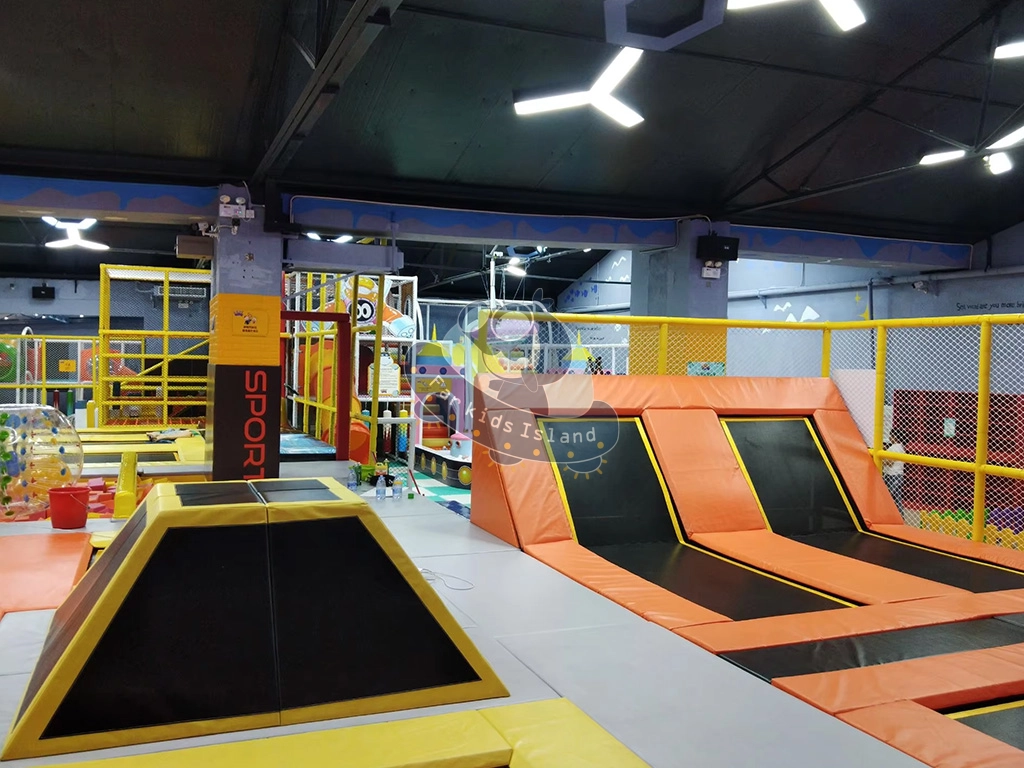
5000 sqm Trampoline Adventure Park: Layout, Attractions & Project Planning
Top Project Picks for Your Next Success



Have Questions or Need More Information?
Ready to Dive Deeper into This Topic?
Explore Detailed Insights and Start Applying Knowledge to Your Project
We’re here to help! Fill out the form below to reach out to our team. Whether you have a question about the article or need assistance with your project, we’re happy to assist you.
Trusted Playground Solution Provider
Professional one-stop indoor playground solutions with a strong focus on design, safety, and eco-friendly materials.
Our Location
No. 106, No. 27, Jiejin 2nd Road, Shiqiao Street, Panyu District, Guangzhou, China.
Say Hello
Social Links
Whatsapp: +8613632109166
Far kids island
Far kids island
Far kids island
TONGSHUO
Guo Wenshu